Nano SIM vs Micro SIM: 2026 Size And Compatibility Quick Guide
Nano SIMs remain the dominant physical format in 2026. While eSIMs are growing in popularity, the vast majority of budget and mid-range phones still rely on the physical Nano slot...
Quincy D.-Feb 23, 2026
Image by Unsplash
Table of Contents
Nano SIMs remain the dominant physical format in 2026. While eSIMs are growing in popularity, the vast majority of budget and mid-range phones still rely on the physical Nano slot.
Understanding the evolution of subscriber identity modules is crucial for staying connected in today’s fast-paced digital world. As mobile technology advances, the physical difference between a nano SIM vs micro SIM has become a common point of confusion for many users upgrading their devices.
1. Nano SIM vs Micro SIM: What Is The Difference?
Nano SIM vs Micro SIM: At their core, both SIM types serve the same function of authenticating your device on a cellular network, but their form factors have evolved significantly. The primary distinction lies in the amount of plastic surrounding the chip, which dictates which generation of smartphones they fit into.
Size & Physical Dimensions
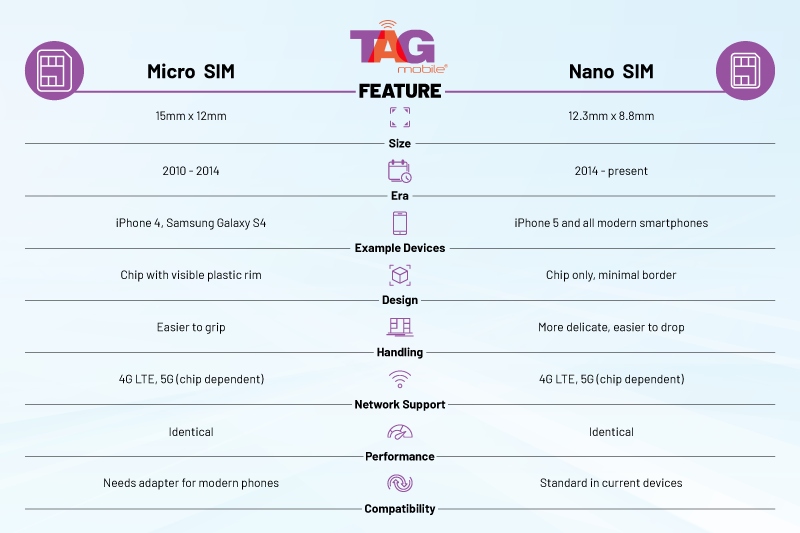
The most obvious difference between Nano SIM vs Micro SIM is the physical footprint. A Micro SIM measures 15mm x 12mm, while a Nano SIM is significantly smaller at 12.3mm x 8.8mm.
The Nano SIM (4FF) can effectively remove all plastic borders, leaving only the contact chip area exposed. This size reduction allows manufacturers to free up valuable internal space for larger batteries and other components.
Device Compatibility & Supported Phones
Micro SIMs were the standard for devices released roughly between 2010 and 2014, such as the Samsung Galaxy S4 or iPhone 4.
In contrast, the Nano SIM became the industry standard starting with the iPhone 5 and is now used in almost all modern smartphones. If you are getting a TAG Mobile SIM card, you will notice that most current plans cater to Nano SIM slots or the newer eSIM technology.
Durability & Handling Differences
Despite the Nano SIM vs Micro SIM size difference, both cards are relatively durable, but the Nano SIM requires more delicate handling.
Because it is essentially just a chip with no plastic edge to grip, it is easier to drop or misalign in the tray. However, once seated in the tray, both offer identical resilience against daily wear and tear.
Network Performance & Functionality
Interestingly, the size of the plastic has no impact on network performance. A Micro SIM and a Nano SIM can both support 4G LTE and 5G networks, provided the chip itself is updated. The capabilities are determined by the chip’s internal technology, not its outer dimensions.
Visual Size Comparison: Millimeters Matter
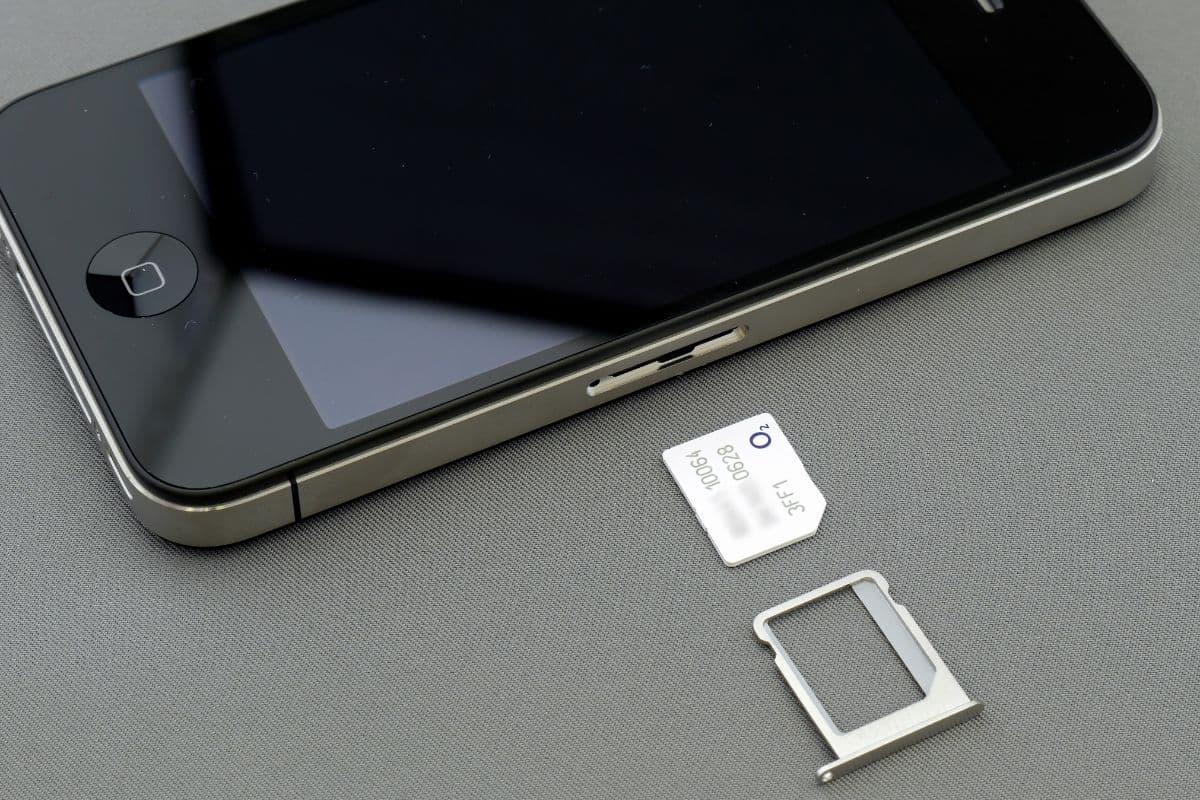
When you place a Nano SIM vs Micro SIM side by side, the Micro SIM looks like a small postage stamp with a visible plastic rim.
The Nano SIM looks like a tiny gold square with almost no border. This visual size comparison guide highlights that while the thickness is nearly identical, the length and width reductions are drastic enough to make them incompatible without adapters.
Putting micro SIM and nano SIM on a scale.
2. How Do I Know If My SIM Is Nano Or Micro?
The easiest way to identify your SIM is to compare it, Nano SIM vs Micro SIM, to the slot on your phone. If your phone was manufactured after 2015, it almost certainly requires a Nano SIM. You can also check your phone’s manual or look up the specifications online to confirm.
Sometimes you may find yourself with a SIM card that doesn’t fit your new phone, leading to the need for physical modification or adapters. While it is possible to alter the size of your card, it is important to proceed with caution to avoid damaging the chip.
Can I Use A Micro SIM In A Nano SIM Phone?
You cannot directly insert a Micro SIM into a Nano SIM slot because it is too large. However, if you have a Nano SIM and need to use it in an older phone that takes a Micro SIM, you can use a plastic adapter tray. This reversibility is useful for those who switch between backup devices.
Using A SIM Card Cutter vs Requesting a Replacement
Tech-savvy users sometimes use a “SIM cutter” tool to punch a Micro SIM down to Nano size.
While this can work, it is risky. It is often safer and free to simply contact your carrier. You can learn more about obtaining compliant cards with free SIM cards with free data rather than risking your current connection.
The Risk of Damaging SIM Slots with DIY Cuts
Cutting a SIM card with scissors or a dull cutter can leave rough edges or burrs. These imperfections can get snagged on the delicate pins inside your phone’s SIM tray, potentially ruining the device’s ability to read any card. It is widely recommended to avoid DIY cuts unless necessary.
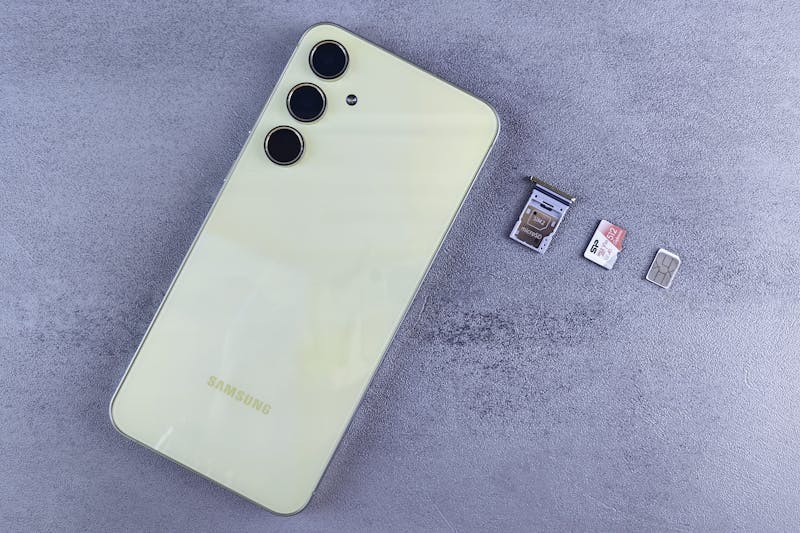
Nano SIM vs Micro SIM: You should choose a suitable SIM for a smooth connecting experience. (Image by Pexels)
Selecting the correct SIM ensures you have seamless access to voice and data networks without hardware issues. Most carriers now provide “triple-cut” SIM cards that allow you to punch out the size you need, whether it is Standard, Micro, or Nano.
TAG Mobile: Ensuring Compatibility with Almost All Phones
TAG Mobile simplifies this process by providing versatile SIM kits compatible with a vast array of devices.
Whether you are bringing your own phone or getting a new one, TAG Mobile ensures you have the right fit. Their network supports a wide range of devices, ensuring that whether you have an older Micro SIM phone or a new Nano SIM flagship, you stay connected.
Nano SIM vs Micro SIM: Apply at TAG Mobile to stay connected
The industry is slowly moving away from physical cards entirely. It is said that SIMs have been standardizing embedded to allow users to switch carriers digitally without swapping plastic chips.
This transition eliminates the “nano vs micro” size debate for future flagship devices.
As we move further into 2026, the debate “nano SIM vs micro SIM” between different SIM sizes is becoming less about choice and more about legacy compatibility. Understanding the distinction between these formats ensures you can keep your older devices running or seamlessly upgrade to new ones.
TAG Mobile remains committed to keeping you connected with flexible options that suit whatever device you choose to carry. Always ensure you have the correct format to avoid hardware damage and enjoy uninterrupted service.
Notice: The government does not cover device costs, only basic service through Lifeline. Any free or discounted devices, upgrades, or top-ups are limited-time TAG Mobile offers and may vary by state, eligibility, and availability. Terms and conditions apply.
Share
TAG Blog
Stories, guides, and helpful updates for staying connected.