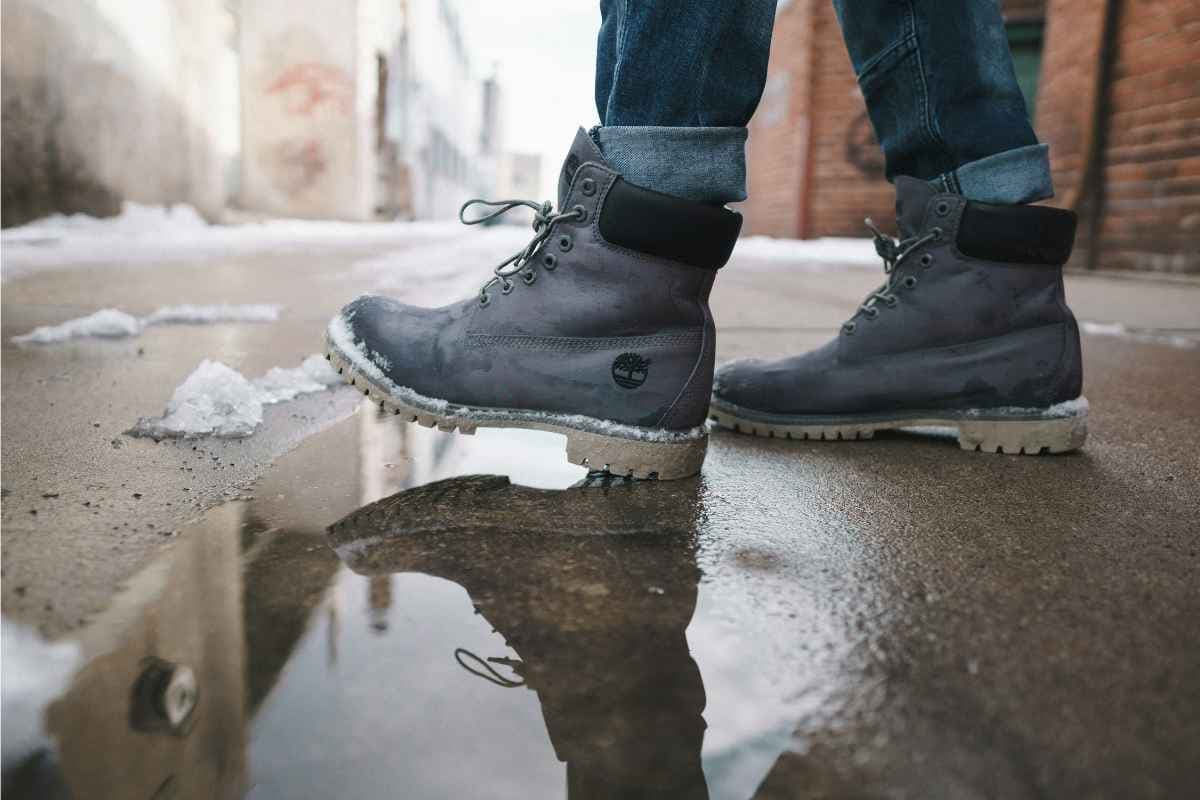
Rain and damp conditions don’t have to ruin your boots, but without proper protection, moisture can slowly wear them down from the outside in. Knowing how to waterproof boots isn’t just about applying a product; it’s about choosing the right method for each material and doing it correctly.
This guide walks you through preparing your boots, sealing vulnerable areas, and maintaining that protection so they stay durable, dry, and ready for everyday use.
1. How to Waterproof Boots Without Damaging the Material
Waterproofing works best when the treatment matches the boot’s material rather than using one product for every pair. Cleaning first, choosing a compatible protector, and allowing proper drying time can improve water resistance without changing texture, color, or breathability.
Leather
Leather needs protection from moisture, but heavy oils or unsuitable waxes can darken the surface or soften it too much. When learning how to waterproof leather boots, choose a conditioner, cream, wax, or spray specifically made for the type of leather you own.
- Brush away dirt and wipe the boots clean.
- Let the leather dry fully before applying any treatment.
- Test the product on a hidden area for color change.
- Apply a thin, even layer with a soft cloth or applicator.
- Work extra product into seams and flex points.
- Let the boots cure according to the product instructions.
- Buff gently if the treatment leaves excess residue.
Suede
Suede can lose its texture or develop dark patches if treated with heavy creams, oils, or waxes. For how to waterproof suede boots, use a spray formulated for suede or nubuck and keep the application light enough to preserve the nap.
- Remove loose dirt with a suede brush.
- Make sure the boots are completely dry.
- Test the spray on a concealed section.
- Hold the can at the recommended distance from the surface.
- Apply a light, even coat without soaking the material.
- Let the boots dry naturally away from direct heat.
- Brush the suede again after drying to restore texture.
Gore-Tex
Gore-Tex footwear already relies on a waterproof membrane, so maintenance should focus on keeping the outer material clean and restoring its water-repellent finish. For how to waterproof Gore Tex hiking boots, avoid products that can clog breathable materials or leave heavy residue.
- Remove the laces and brush off mud or dirt.
- Wash the exterior with water and a mild cleaner suitable for the upper material.
- Rinse away soap residue thoroughly.
- Let the boots dry naturally.
- Apply a compatible water-repellent treatment to the outer fabric or leather.
- Pay attention to seams and high-wear areas.
- Avoid heavy waxes unless the boot manufacturer specifically recommends them.
Cowboy Boots
Cowboy boots vary widely in leather type, finish, and construction, so the safest waterproofing method depends on the specific pair. When considering how to waterproof cowboy boots, check the care label first and avoid saturating decorative stitching, exotic leather, or untreated finishes.
- Dust the boots with a soft brush or clean cloth.
- Use a leather cleaner if dirt or residue is present.
- Allow the boots to dry completely.
- Test the protector in an inconspicuous area.
- Apply a leather-safe spray, cream, or wax in a thin layer.
- Treat seams and welt areas carefully.
- Let the boots cure before wearing them outdoors.
2. How to Choose the Right Waterproofing Method for Your Boot Material
Material should be the first consideration before choosing any waterproofing treatment because different surfaces react differently to sprays, waxes, creams, and conditioners. Understanding how to waterproof boots starts with identifying the material and finish, helping protect the boots without reducing breathability, changing color, or damaging texture.
- Smooth leather: Choose leather-safe waxes, creams, or sprays that add moisture resistance without over-softening the surface.
- Suede and nubuck: Use dedicated protective sprays instead of oils or heavy waxes that can flatten the nap or darken the material.
- Synthetic fabric: Look for lightweight water-repellent sprays designed for nylon, polyester, or mixed textile uppers.
- Waterproof membranes: For Gore-Tex and similar materials, select breathable treatments that restore exterior repellency without coating the membrane heavily.
- Exotic or specialty leather: Follow the manufacturer’s care instructions closely because snakeskin, ostrich, and other specialty finishes may require specific products.
3. Main Waterproofing Mistakes That Shorten Boot Life
Waterproofing can protect footwear from moisture, but the wrong technique may trap dirt, weaken finishes, or reduce breathability. Avoiding a few common errors makes how to waterproof boots more effective and helps preserve the material for longer.
Applying Product to Dirty Boots
Mud, dust, salt, and old residue can prevent waterproofing products from bonding evenly with the surface. Clean the boots first and let them dry completely before treatment. Applying spray, wax, or cream over grime can seal contaminants into the material and create uneven protection.
Using the Wrong Product
One waterproofing formula does not suit every material. Heavy waxes may flatten suede, while certain oils can darken leather or affect its structure. Match the treatment to leather, suede, synthetic fabric, or waterproof membranes, and always check the manufacturer’s care instructions before applying anything.
Applying Too Much at Once
Thick layers do not necessarily improve water resistance. Excess product can leave boots sticky, darken the finish, reduce breathability, or create buildup around seams. Apply thin, even coats and allow each layer to absorb or dry fully before deciding whether another application is needed.