How to Get Free Hotspot: 7 Best Legit Ways to Get Connected
Learning how to get free hotspot access can help you stay connected without adding another major monthly expense. The right option depends on your circumstances. You may qualify fo...
Quincy D.-Sep 22, 2026
Image by Unsplash
Table of Contents
Learning how to get free hotspot access can help you stay connected without adding another major monthly expense. The right option depends on your circumstances.
You may qualify for assistance or have access to a participating organization. Your current mobile plan may also include hotspot data. Before signing up, check the coverage and eligibility rules. Review the data limits and device terms as well.
1. Does a Federal Program Provide Free Hotspot?
No universal federal program automatically gives every applicant a free hotspot device.
While federal assistance such as Lifeline can reduce the cost of qualifying phone or internet service, the free equipment depends on the organization providing the offer. For example, a participating Lifeline service provider may offer a device directly.
Local organizations such as schools, libraries, and nonprofits may also have their own programs.
2. How to Get Free Hotspot: 7 Options to Try
Since different sources list different opportunities, the best approach is to compare several local and national options instead of relying on one program.
If you’re wondering how to get free hotspot, several options may help you access internet without paying for a separate connection.
Check Your Local Public Library
Public libraries are one of the most practical places to investigate how to get a free hotspot, especially if home internet is unreliable or temporarily unavailable.
Some library systems lend mobile hotspots to cardholders for a fixed number of days, while others operate longer-term digital-access programs for qualifying residents.
Policies vary widely between library systems. Check how long you can borrow the device and whether renewals are allowed.
You should also ask about data limits and coverage. Find out whether there is a waiting list or a replacement fee.
Ask Your School or School District
Schools and districts may provide hotspot loans when students lack dependable internet for homework, virtual classes, or online assignments.
Some initiatives distribute devices directly through participating schools, while others require families to confirm eligibility through school meal programs or other household criteria.
Look for Nonprofit and Community Internet Programs
Nonprofits, community centers, and digital-inclusion organizations sometimes provide devices, internet access, or referrals to lower-cost connectivity programs.
Rather than serving every individual directly, many organizations work through community partners. Schools and libraries may help connect people with these programs. Youth programs and housing groups may also participate.
Check Mobile Carrier Promotions
Wireless providers occasionally run promotions that include hotspot-capable devices, bonus tethering data, or discounted service for qualifying customers.
These offers change frequently. Some require you to switch service or select a certain plan. Others may have eligibility requirements or geographic restrictions.
Anyone researching how to get free mobile hotspot should read the full promotion rather than focusing only on the word “free.”
Confirm whether the device is yours to keep. Check how long the promotional period lasts and how much data it includes. You should also verify whether activation or plan charges still apply.
Use Free Public Wi-Fi as a Hotspot Alternative
Free public Wi-Fi can be a useful substitute when you only need temporary internet access and cannot obtain a dedicated hotspot. Free Wi-Fi may be available at places such as libraries and campuses.
Community centers and government buildings may also offer free Wi-Fi. You may find it in transportation hubs and other public spaces as well.
Public networks are less convenient than carrying your own connection and should be used carefully for sensitive activities.
You should avoid transmitting important financial or account information on unsecured networks.
Keep device sharing disabled when using public Wi-Fi. Whenever possible, use encrypted websites and trusted networks.
Review Existing Mobile Plans for Included Hotspot Data
Before applying for another device, check whether your current phone plan already includes tethering. Many smartphones can share cellular data with a laptop or tablet without requiring separate hardware.
Depending on the device, you may be able to share your connection through built-in hotspot features. USB tethering and Bluetooth may also be available.
For how to get free hotspot access in practice, an included tethering allowance may be enough if your plan already covers it.
Review how much hotspot data your plan includes and when high-speed access ends. You should also check the carrier’s throttling rules and any limits on connected devices.
Use Assistance Programs That Can Lower Connectivity Costs
Lifeline is a federal benefit that can reduce the cost of qualifying phone or internet service for eligible low-income households.
Applicants can qualify through household income or participation in programs such as SNAP, Medicaid, SSI, Federal Public Housing Assistance, Veterans Pension or Survivors Benefit, or certain Tribal programs.
Lifeline does not promise every applicant a free standalone hotspot. However, participating mobile broadband providers that offer devices must make at least one hotspot-capable option available, and individual providers may offer their own free or discounted devices and service promotions.
Free connectivity offers can be useful, but misleading promotions often hide fees, collect unnecessary personal information, or imitate legitimate assistance programs.
When researching how to get hotspot for free, verify who is providing the offer and what you are agreeing to before submitting an application.
Check the provider or organization first: Look for an official website, clear contact information, and verifiable program details.
Read what “free” actually includes: Confirm what the offer actually covers. It may include the hotspot device and monthly data, while activation or shipping could still cost extra.
Avoid requests for unusual payments: Legitimate assistance programs should not require gift cards, cryptocurrency, or suspicious upfront transfers to unlock benefits.
Protect sensitive information: Only provide Social Security details, benefit documents, or identification through trusted application channels when verification genuinely requires them.
Verify government-benefit claims: Lifeline eligibility and application information can be checked through official Lifeline Support resources.
How to get free hotspot? Avoid fake free hotspot scams by checking the provider, offer terms, and website before signing up. (Image by Unsplash)
4. FAQs about Getting a Free Hotspot
Free connectivity can come from several sources, but device ownership, mobile data, and eligibility rules are not identical across programs.
Understanding how to get free hotspot also means knowing when an existing phone or government benefit can help reduce the need for separate equipment.
Can I get a free phone and use it as a hotspot?
Possibly. Some wireless providers offer free or discounted phones to eligible customers, and many smartphones support tethering, but the service plan must also allow hotspot use.
Check the included hotspot allowance before relying on the phone for laptops or tablets.
Can I use my phone as a hotspot for free?
Turning on tethering itself usually does not create a separate charge when the feature is already included in your plan.
However, hotspot usage still consumes mobile data and may have its own limit, reduced speeds, or additional charges depending on the carrier.
Can SNAP or Medicaid help me qualify for free internet service?
SNAP or Medicaid participation can help a household qualify for Lifeline, which provides a federal discount on eligible phone or internet service.
It does not automatically guarantee completely free internet or a free hotspot, since the final service and device offer depends on the participating provider.
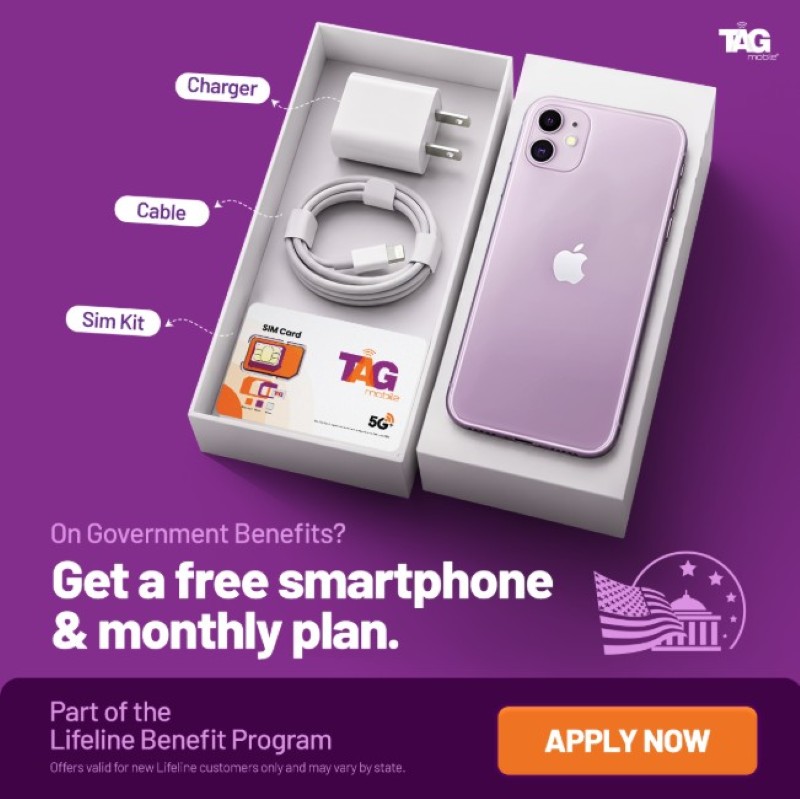
TAG Mobile, for example, offers Lifeline-supported wireless service to eligible customers, with plans and available benefits varying by location and current offers.
See if you qualify for Lifeline, and apply through TAG Mobile to claim the best free phone and plan.
Note: Eligibility varies by state and program. Offers depend on availability and qualifications. TAG Mobile operates under the federal Lifeline Program as an Eligible Telecommunications Carrier (ETC). Service is non-transferable and limited to one service per household.
5. Final Thoughts
Different households may reach free or low-cost internet through very different paths. When exploring how to get free hotspot, start by checking the options available in your area.
Compare each option based on eligibility, data limits, and coverage. Also check whether the hotspot is yours to keep or must be returned. TAG Mobile is another option for eligible users seeking Lifeline-supported wireless service.
Share
TAG Blog
Stories, guides, and helpful updates for staying connected.