What Is a Food Mill? How It Works, Best Uses, and Substitutes
Silky tomato sauces and creamy mashed potatoes often depend on more than the ingredients themselves. The right kitchen tool can make all the difference in texture and consistency...
Quincy D.-Nov 23, 2026
Image by Unsplash
Table of Contents
Silky tomato sauces and creamy mashed potatoes often depend on more than the ingredients themselves. The right kitchen tool can make all the difference in texture and consistency.
So, what is a food mill, and why do home cooks still use one instead of a blender? This guide explains its simple mechanism, practical cooking applications, and useful alternatives when you don’t have one available.
1. What Is a Food Mill?
Designed to mash and strain food in one simple step, a food mill is a hand-operated kitchen tool that transforms cooked fruits and vegetables into smooth, consistent purées.
A food mill uses three main components to process softened ingredients and separate smooth pulp from unwanted pieces:
Bowl: Holds the softened ingredients during processing.
Perforated disc: Allows the softened ingredients to pass through small holes while retaining larger pieces.
Rotating hand crank: Presses ingredients against the disc to separate skins, seeds, and coarse fibers from the pulp.
Unlike electric blenders, food mills require no electricity and are particularly useful for preparing tomato sauces and applesauce.
2. What Is a Food Mill Used For? 7 Practical Kitchen Uses
From homemade sauces to side dishes, food mills help create smooth textures while removing unwanted skins and seeds.
Their ability to mash and strain ingredients simultaneously makes them especially useful for recipes that require gentle processing without completely blending everything together.
Making Smooth Tomato Sauces
Food mills are particularly useful for preparing homemade tomato sauces from cooked or softened tomatoes.
The rotating disc presses the tomato flesh through small holes while retaining most skins and seeds.
Preparing Creamy Mashed Potatoes
Cooked potatoes can be passed through a food mill to create a light, fluffy texture with minimal lumps.
Unlike blenders or food processors, which can overwork potato starch, food mills process potatoes more gently.
Making Homemade Applesauce
Softened apples can be processed through a food mill to create smooth applesauce without peeling every piece beforehand. The mill separates most skins and seeds from the cooked flesh, simplifying preparation.
Creating Smooth Vegetable Soups
Cooked carrots and other tender vegetables can be passed through a food mill to create smooth soup bases.
The tool breaks down softened ingredients while retaining a natural, slightly textured consistency.
Preparing Fruit Purées and Compotes
Food mills work well for turning cooked berries and other soft fruits into purées for desserts or sauces.
Their straining action helps remove unwanted seeds and skins, although finer discs may be necessary for small berry seeds.
Making Homemade Baby Food
For parents wondering what is a food mill used for beyond everyday cooking, preparing homemade baby food is another practical application. Properly cooked vegetables and fruits can be processed into soft purées.
The CDC’s guidance on introducing solid foods recommends cooking firm fruits and vegetables until soft and adjusting food textures to match a baby’s developmental stage.
Preparing Fruit Spreads and Preserves
Food mills help prepare smooth fruit bases for homemade jams and preserves.
Processing cooked fruit removes unwanted skins and larger seeds while maintaining much of the pulp.
Operating a food mill requires little preparation, but the right disc and properly softened ingredients make a noticeable difference in the final texture.
Step 1. Prepare and Soften Your Ingredients
Wash and trim your ingredients, removing hard pits and stems. Cook firm fruits or vegetables until tender enough to pass through the mill without excessive force.
Step 2. Choose the Right Grinding Disc
Select a perforated disc based on your desired texture. Fine discs produce smoother purées, while medium or coarse discs allow more pulp through for thicker, slightly textured preparations.
Step 3. Position the Food Mill Over a Bowl or Pot
Place the assembled food mill securely over a sturdy bowl or cooking pot. Ensure its supporting legs or hooks rest firmly on the rim to prevent slipping during operation.
Step 4. Add Food and Turn the Handle
Add a manageable portion of softened ingredients to the mill. Rotate the handle steadily, following the manufacturer’s instructions, allowing the blade to press food through the perforated disc.
Step 5. Collect the Purée and Remove the Remaining Solids
Collect the processed purée beneath the mill and check its consistency.
Discard retained skins and seeds, then disassemble and clean the equipment according to instructions.
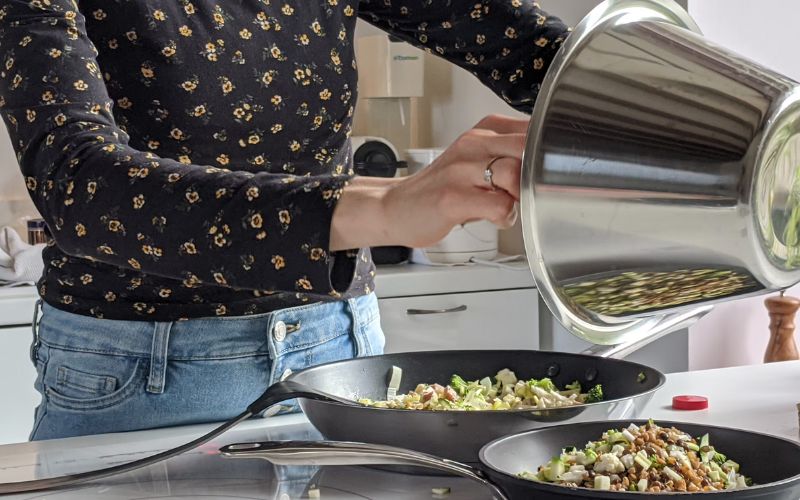
What is a food mill? Use it in five simple steps for smooth purees and sauces. (Image by Unsplash)
4. What Are the Substitutes That Work Like a Food Mill?
Not every kitchen has a food mill, but several common tools can achieve similar results depending on the recipe and desired texture.
Fine-Mesh Sieve and Spoon: Press softened fruits or vegetables through a fine-mesh sieve using the back of a spoon or spatula.
Potato Ricer: Push cooked potatoes or other soft vegetables through a potato ricer to achieve a fluffy, finely mashed texture. It works particularly well for mashed potatoes but cannot efficiently separate tomato skins or fruit seeds.
Food Processor: Pulse cooked ingredients until they reach the desired consistency. This option works well for thick vegetable purées and sauces, but it processes skins and seeds along with the flesh unless they are removed beforehand.
Blender or Immersion Blender: Blend softened ingredients into a smooth mixture for soups, sauces, or fruit purées. For seedless results, pass the mixture through a fine-mesh strainer afterward. Avoid overprocessing starchy potatoes, which can become gummy.
Colander and Wooden Spoon: Press cooked tomatoes or soft fruits through a colander with relatively small holes.
Food Strainer or Tomato Press: Use a manual or electric food strainer designed to separate pulp from skins and seeds.
For anyone asking what is a food mill alternative that delivers the closest results, a fine-mesh sieve paired with a spoon is a practical choice for small batches, while a dedicated food strainer is better suited to larger quantities.
5. FAQs about Food Mills
Although food mills are straightforward to operate, their suitability depends on the ingredients, desired texture, and preparation method.
These answers clarify common questions about handling raw foods, choosing between kitchen tools, and preparing different types of purées.
Can you use a food mill for raw vegetables?
Food mills generally work best with cooked or softened vegetables because firm, raw ingredients are difficult to push through the grinding disc.
Very soft, ripe produce may work in some models, but harder vegetables such as raw carrots and potatoes should be cooked first.
Is a food mill better than a blender?
Neither tool is universally better because they serve different purposes.
Food mills are ideal for gently mashing cooked ingredients while separating many skins and seeds, whereas blenders create smoother, more thoroughly blended mixtures and work well for soups, smoothies, and sauces.
What foods should you avoid putting in a food mill?
Avoid hard vegetables, large pits, and other ingredients that could damage the grinding mechanism.
Extremely fibrous foods, such as raw celery, may also clog the disc, so remove tough parts and soften suitable ingredients before processing.
Is a food mill the same as a potato ricer?
No, although both tools can produce smooth, fluffy mashed potatoes.
A potato ricer presses cooked ingredients through small holes using a lever, while a food mill uses a rotating blade and interchangeable discs to process larger batches and separate certain skins and seeds.
Can you use a food mill to make baby food?
Yes, a food mill can turn properly cooked fruits and vegetables into homemade baby food with a soft, manageable consistency.
Choose an appropriate grinding disc and adjust the texture to the baby’s developmental stage.
6. Final Thoughts
From silky tomato sauces to fluffy mashed potatoes, a food mill offers a simple way to achieve consistent textures without complicated equipment.
Now that you know what is a food mill, you can decide when to use one and which substitutes suit your recipes. For more daily tips and connectivity guides, let’s explore with TAG Mobile today!
Share
TAG Blog
Stories, guides, and helpful updates for staying connected.