What Food Is Chicago Known For? 15 Iconic Foods You Have to Try
Chicago’s food identity was built through neighborhood traditions, immigrant communities, working-class favorites, and dishes created right in the city. If you’re curious what food...
Quincy D.-Oct 31, 2026
Image by Unsplash
Table of Contents
Chicago’s food identity was built through neighborhood traditions, immigrant communities, working-class favorites, and dishes created right in the city.
If you’re curious what food is Chicago known for, the answer stretches far beyond deep-dish pizza. Italian beef, loaded hot dogs, tavern-style pies, jibaritos, rib tips, and even colorful ice cream all have a place in the story.
Here are 15 Chicago classics worth knowing before your next bite.
1. What Food Is Chicago Known For?
Chicago doesn’t have just one signature dish; its culinary reputation comes from foods shaped by generations of neighborhood restaurants, street stands, taverns, and immigrant communities. For anyone asking what type of food is Chicago known for, these 15 classics capture some of the city’s most recognizable flavors.
Deep-Dish Pizza
Deep-dish pizza is the obvious answer when someone asks what food is Chicago best known for. Baked in a deep pan, it features a tall, buttery crust layered with cheese, toppings, and chunky tomato sauce. The result is thick, filling, and unmistakably associated with Chicago dining.
Chicago-Style Hot Dog
Chicago’s famous hot dog starts with an all-beef frankfurter in a poppy-seed bun, topped with seven classic ingredients:
Yellow mustard
Chopped onions
Sweet pickle relish
Tomato wedges
A pickle spear
Sport peppers
Celery salt
Traditionalists famously leave ketchup off. The combination delivers sweet, tangy, salty, and spicy flavors in every bite.
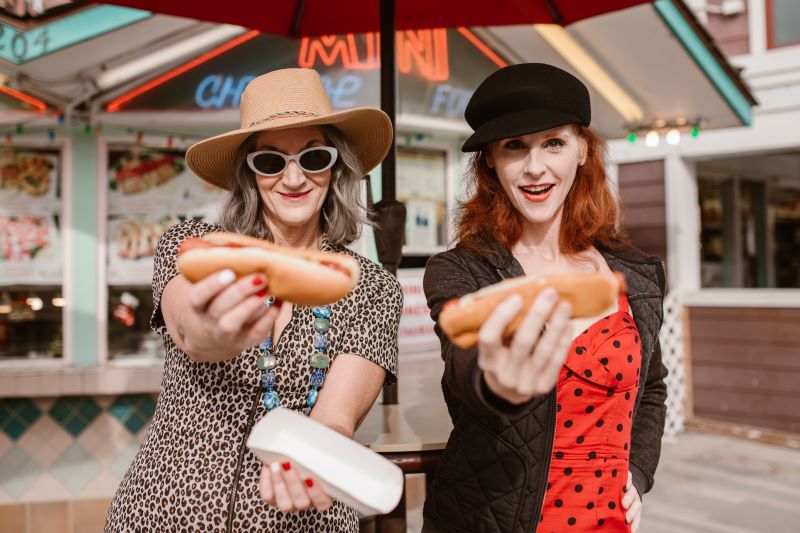
Chicago’s famous hot dog starts with an all-beef frankfurter in a poppy-seed bun (Image by Pexels)
Italian Beef
Italian beef combines thinly sliced seasoned roast beef with a long Italian-style roll and flavorful jus. Diners can customize their sandwiches in several ways:
Dry: The bread receives little to no extra jus.
Wet: The sandwich gets extra jus poured over the beef.
Dipped: The entire sandwich is briefly dipped in the cooking juices.
Sweet peppers or spicy giardiniera are popular additions. Its messy, juicy construction is part of the experience and one reason it remains a Chicago sandwich essential.
Tavern-Style Pizza
Deep dish gets international attention, but many Chicagoans regularly eat thin, crisp tavern-style pizza. This local favorite is known for its:
Thin, crunchy crust
Toppings spread nearly to the edge
Small square slices instead of traditional wedges
The party-cut format makes it especially convenient for sharing at neighborhood bars, family gatherings, and casual pizza restaurants.
Jibarito
The jibarito replaces conventional sandwich bread with flattened, fried green plantains. Typically filled with steak, lettuce, tomato, cheese, and garlic-flavored mayonnaise, the sandwich emerged from Chicago’s Puerto Rican food scene.
Its crispy plantain exterior and savory filling offer a distinctly local example of what food is Chicago known for beyond the city’s famous pizzas and hot dogs.
Chicken Vesuvio
Chicken Vesuvio is an Italian-American dish closely associated with Chicago restaurants. It typically features chicken and potato wedges cooked with garlic, herbs, white wine, and olive oil. Some versions also include peas.
Its garlicky pan sauce and crisp, golden chicken make it a familiar choice on Chicago steakhouse and Italian restaurant menus. Although its exact origins remain uncertain, the dish has become a local classic.
Rib Tips
Chicago barbecue has its own identity, and rib tips play a major role in it. These flavorful pieces cut from the lower portion of spare ribs are commonly smoked, chopped, and covered with barbecue sauce.
They’re particularly associated with South Side barbecue traditions and often arrive with:
French fries
Slices of white bread
Extra barbecue sauce
Pizza Puff
Pizza puff takes familiar pizza flavors and turns them into a compact, deep-fried snack. A flour tortilla-like wrapper encloses ingredients such as tomato sauce, cheese, and seasoned sausage before being fried until crisp.
Commonly found at Chicago hot dog stands and fast-food counters, it’s rich, portable, and distinctly local.
Maxwell Street Polish
The Maxwell Street Polish centers on a grilled or fried Polish sausage served in a bun and traditionally topped with three main ingredients:
Yellow mustard
Grilled onions
Sport peppers
Born from Chicago’s Maxwell Street food culture, it delivers a smoky, savory bite with enough sweetness, tang, and heat to keep the relatively simple combination memorable.
Chicago-Style Popcorn
Chicago-style popcorn combines two contrasting flavors in one mix:
Cheese popcorn: Coated with a savory, salty cheese seasoning.
Caramel popcorn: Covered in a sweet, crunchy caramel coating.
The combination of sweet and savory flavors has become closely associated with Chicago’s snack culture, particularly through local popcorn shops. It’s also an easy Chicago food souvenir because it travels much better than a deep-dish pizza.
Gym Shoe Sandwich
The Gym Shoe is a towering Chicago sandwich commonly associated with South Side and West Side carryouts. Its exact combination varies by shop, but common ingredients include:
Roast beef
Corned beef
Gyro meat
Cheese, lettuce, and tomato
Onions and sauce
Sometimes giardiniera
While pizza and hot dogs often dominate discussions of what food is Chicago known for, the Gym Shoe highlights the city’s equally distinctive neighborhood sandwich culture.
Breaded Steak Sandwich
Breaded steak sandwiches are especially connected with Chicago’s Bridgeport neighborhood. The preparation is straightforward:
Thin steak is coated in seasoned breadcrumbs.
The meat is fried until golden and crisp.
It’s placed inside an Italian roll.
Tomato sauce and melted mozzarella are added on top.
The result lands somewhere between an Italian-American steak sandwich and a hearty parm-style entrée that happens to fit inside bread.
Mild Sauce
Anyone exploring what food is Chicago known for will eventually encounter mild sauce, particularly at fried chicken and barbecue spots on the South and West Sides. Recipes vary, but the condiment generally brings together sweet, tangy, and mildly spicy flavors.
It’s commonly served over or alongside:
Fried chicken
Chicken wings
French fries
Other carryout favorites
Rainbow Cone
Rainbow Cone has been a Chicago dessert tradition since 1926. Its signature combination layers five flavors into one colorful cone:
Chocolate
Strawberry
Palmer House
Pistachio
Orange sherbet
Rather than choosing a single flavor, diners get five contrasting tastes at once, creating a dessert that’s as recognizable visually as many of Chicago’s savory classics.
Shrimp DeJonghe
Shrimp DeJonghe is a Chicago-associated baked shrimp dish featuring a rich topping of breadcrumbs, butter, garlic, herbs, and often a splash of sherry. It became known through the DeJonghe restaurant in Chicago around the turn of the 20th century, although the exact date and circumstances of its creation are uncertain.
The buttery, garlicky topping gives the shrimp a rich flavor and makes this dish a reminder of an older chapter in Chicago’s restaurant history.
15 iconic Chicago foods shaped by the city’s neighborhoods, immigrant traditions, street stands, and local restaurants. (Image by Unsplash)
2. Why Does Chicago Have So Many Signature Foods?
Chicago’s culinary identity didn’t emerge from a single restaurant trend or style of cooking. Generations of migration, neighborhood culture, industrial growth, and local creativity turned practical everyday meals into dishes now closely associated with the city.
Diverse immigrant communities: Italian, Polish, Greek, Mexican, Puerto Rican, Eastern European, and other communities brought culinary traditions that evolved within Chicago neighborhoods and influenced everything from sausages and pizza to sandwiches and street food.
Strong neighborhood identities: Chicago is a city of distinct neighborhoods, and many developed their own restaurants, food stands, bakeries, and specialties. This helped local dishes survive even as broader dining trends changed.
Working-class food culture: Chicago’s industrial history created demand for meals that were filling, affordable, portable, and flavorful. Italian beef, Polish sausages, hot dogs, and substantial sandwiches fit naturally into that environment.
Creative adaptation: Chicago cooks frequently transformed existing dishes into something distinctly local. Deep-dish pizza, the jibarito, pizza puff, and regional sandwich styles demonstrate how familiar ingredients can develop entirely new identities.
Street stands and casual restaurants: Hot dog stands, taverns, barbecue joints, and neighborhood carryouts helped signature foods become part of everyday life rather than occasional special-occasion meals.
Multiple regional traditions: Anyone wondering what is Chicago known for food quickly discovers that there isn’t one category. Pizza, barbecue, sausages, Italian-American dishes, Puerto Rican creations, sandwiches, snacks, and desserts all contribute to the city’s reputation.
3. How to Experience Chicago Food Like a Real Local?
Chicago’s culinary identity didn’t emerge from a single restaurant trend or style of cooking. Generations of migration, neighborhood culture, industrial growth, and local creativity turned practical everyday meals into dishes now closely associated with the city.
Diverse immigrant communities: Italian, Polish, Greek, Mexican, Puerto Rican, Eastern European, and other communities brought culinary traditions that evolved within Chicago neighborhoods and influenced everything from sausages and pizza to sandwiches and street food.
Strong neighborhood identities: Chicago is a city of distinct neighborhoods, and many developed their own restaurants, food stands, bakeries, and specialties. This helped local dishes survive even as broader dining trends changed.
Working-class food culture: Chicago’s industrial history created demand for meals that were filling, affordable, portable, and flavorful. Italian beef, Polish sausages, hot dogs, and substantial sandwiches fit naturally into that environment.
Creative adaptation: Chicago cooks frequently transformed existing dishes into something distinctly local. Deep-dish pizza, the jibarito, pizza puff, and regional sandwich styles demonstrate how familiar ingredients can develop entirely new identities.
Street stands and casual restaurants: Hot dog stands, taverns, barbecue joints, and neighborhood carryouts helped signature foods become part of everyday life rather than occasional special-occasion meals.
Multiple regional traditions: Anyone wondering what kind of food is Chicago known for quickly discovers that there isn’t one category. Pizza, barbecue, sausages, Italian-American dishes, Puerto Rican creations, sandwiches, snacks, and desserts all contribute to the city’s reputation.
4. Are You Fully Using Your Phone to Navigate and Explore Chicago?
Exploring a city as food-rich as Chicago is much easier when restaurant menus, maps, transit information, directions, and reviews are available wherever you go. For eligible households trying to keep wireless costs manageable, TAG Mobile offers another way to stay connected without adding unnecessary pressure to the monthly budget.
Why Consider TAG Mobile?
TAG Mobile is a U.S. wireless service provider offering prepaid wireless options and Lifeline-supported service for qualifying customers. Depending on location, eligibility, current plans, and inventory, notable benefits can include:
$0 monthly Lifeline-supported wireless service for qualifying customers under available plans.
Unlimited talk and text to support everyday communication.
Monthly mobile data for maps, restaurant searches, messaging, browsing, and other online needs.
Free or discounted phone offers may be available to eligible customers, depending on current promotions, location, and inventory.
Nationwide coverage helps customers stay connected at home and while traveling.
How Can You Receive TAG Mobile Benefits?
Qualifying for the federal Lifeline Program is the key starting point. There are two main ways to qualify:
Income-based eligibility: Your household income is at or below 135% of the Federal Poverty Guidelines.
Program-based eligibility: You or an eligible member of your household participates in a qualifying assistance program, such as SNAP, Medicaid, Supplemental Security Income (SSI), Federal Public Housing Assistance (FPHA), Veterans Pension and Survivors Benefit, or certain Tribal assistance programs.
How to Apply for a Free Phone at TAG Mobile
The application can be completed online, although available service and device promotions vary by location. Before selecting a phone, review the offer displayed for your ZIP code so you know exactly what your eligibility provides.
Step 1: Verify your Lifeline eligibility. Confirm that you qualify through household income at or below 135% of the Federal Poverty Guidelines or participation in an eligible assistance program.
Step 2: Enter your ZIP code. Visit the TAG Mobile website, enter your ZIP code, and select APPLY NOW to view the Lifeline service and current offers available in your area.
Step 3: Choose a Lifeline plan. Review the available service options and select the plan offered for your location.
Step 4: Select your device option. Choose an eligible free or discounted phone if available, purchase another offered device, or select Bring Your Own Device (BYOD).
Step 5: Complete your application. Enter your legal name, date of birth, contact information, residential address, and required household details accurately.
Step 6: Complete the verification. Follow the applicable verification process and provide proof of identity, income, qualifying program participation, or address if supporting documentation is requested.
Step 7: Review and submit. Double-check your information, selected plan, device or BYOD details, and any applicable charges or terms before submitting the application.
Step 8: Wait for approval and delivery. After approval and order processing, qualifying device orders are generally delivered within 7-10 business days, subject to inventory and shipping conditions.
Step 9: Activate your service. Follow the instructions provided with your phone, SIM, or eSIM to complete activation and begin using TAG Mobile service.
Free or discounted phones are provider promotional offers rather than guaranteed federal Lifeline benefits. Device models, prices, inventory, and plan benefits can vary by location and current terms.
Apply to receive free or heavily-discounted devices through TAG Mobile Lifeline services.
Note: Eligibility varies by state and program. Offers depend on availability and qualifications. TAG Mobile operates under the federal Lifeline Program as an Eligible Telecommunications Carrier (ETC). Service is non-transferable and limited to one service per household.
5. FAQs about Chicago Food
From towering pizza to uniquely dressed hot dogs, what food is Chicago known for has more than one answer. These quick explanations highlight several dishes that best represent the city’s culinary history and distinctive local style.
What are the top 5 foods to try in Chicago?
Deep-dish pizza, Chicago-style hot dogs, Italian beef, tavern-style pizza, and the jibarito make a strong five-dish introduction. Together, they showcase different sides of Chicago’s food culture, from famous citywide institutions to neighborhood-driven creations.
What food was invented in Chicago?
Several famous foods have strong Chicago origin stories, including deep-dish pizza, the jibarito, and Chicken Vesuvio, although the precise origins of some dishes are debated. Chicago also played an important role in popularizing distinctive preparations such as Italian beef and its highly specific style of hot dog.
What is Chicago-style popcorn?
Chicago-style popcorn combines caramel-coated popcorn with cheese-flavored popcorn in the same mix. The contrast between sweet caramel and salty, savory cheese creates its signature flavor and has made the combination one of the city’s most recognizable snack traditions.
Final Thoughts
Chicago earns its food reputation through more than one legendary pizza or perfectly loaded hot dog. Ask what food is Chicago known for, and you’ll discover a city shaped by neighborhood traditions, immigrant influences, barbecue, sandwiches, street food, and memorable desserts. Taste beyond the tourist favorites to experience the full story, and let TAG Mobile keep maps, menus, and your next Chicago food stop within easy reach.
Share
TAG Blog
Stories, guides, and helpful updates for staying connected.