How to Use a French Press and Dial In Your Perfect Cup
Coffee at home can become a small daily ritual, especially when you have more control over how each cup turns out. A French press keeps the process simple while giving you room to...
Quincy D.-Oct 12, 2026
Image by Unsplash
Table of Contents
Coffee at home can become a small daily ritual, especially when you have more control over how each cup turns out. A French press keeps the process simple while giving you room to adjust the grind, coffee-to-water ratio, steeping time, and strength to match your taste.
The basics of how to use a French press are easy to pick up, but a few small details can make the difference between a balanced brew and one that tastes weak, bitter, or overly gritty.
1. What Does a French Press Actually Do?
Unlike brewers that send water through a bed of coffee, a French press keeps the grounds immersed during brewing. Its mesh plunger then separates most of those grounds from the liquid, producing a cup with a distinctive texture.
Steeps Coffee Grounds in Hot Water
Ground coffee sits directly in hot water, allowing soluble flavor compounds to move into the liquid throughout the steep.
This immersion method gives the grounds sustained contact with water rather than a brief pass-through. Grind size, water temperature, and brewing time all influence how much flavor the water extracts.
Separates the Grounds From the Brew
Pressing the plunger lowers a mesh filter through the brewed coffee, holding most grounds beneath it.
This makes the liquid easier to pour, although very fine particles can still pass through. The filter separates rather than seals the grounds away, so leaving coffee in the press allows extraction to continue.
These contribute to the fuller body and heavier mouthfeel associated with French press coffee. Some sediment is normal, particularly with an uneven grind, so the result is usually less clean than paper-filtered coffee.
Gives You Control Over the Brew
Manual brewing lets you adjust the amount of coffee, water quantity, grind size, temperature, and steeping time. Learning how these variables interact is an important part of how to use a French press and tailor each cup to your preferences.
Changing one variable at a time also makes it easier to identify what improves your brew.
Consistent measurements give you a reliable starting point for finding the coffee strength you enjoy. Follow these steps for how to use a French press for coffee, paying attention to water temperature, saturation, and steeping time.
Step 1: Measure the Coffee and Water
Measure six tablespoons of medium-coarse coffee and 3½ U.S. cups of water for this batch. If your coffee scoop holds two tablespoons, use three level scoops; check its capacity first, since scoop sizes vary and heaped portions change the amount.
Step 2: Heat the Water
Heat the measured water to about 200°F (93°C), checking with a thermometer if available. Set the French press on a stable, heat-resistant surface, then add your grounds; make sure its capacity accommodates the water and coffee without filling the vessel to the brim.
Step 3: Wet the Grounds
Slowly pour 1½ cups of hot water over the grounds, moving the stream around to wet them evenly. Allow one minute for blooming, then stir gently to break up dry pockets and prepare the coffee for the remaining water.
Step 4: Steep, Press, and Pour
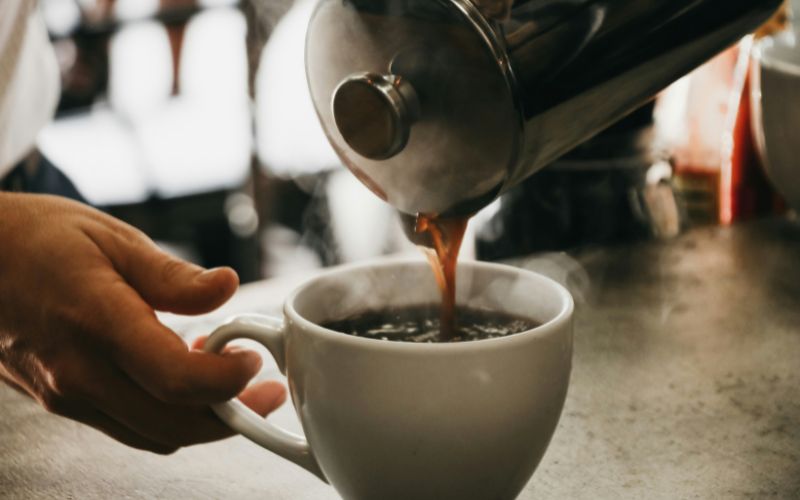
Pour in the remaining two cups of water, fit the lid, and leave the plunger raised for six minutes. Press down slowly without forcing it, then pour all the brewed coffee into cups or a separate serving vessel immediately.
3. How to Use a French Press With Pre-Ground Coffee
No grinder is needed to enjoy French press coffee, but the grind in your bag can influence both flavor and sediment. These steps explain how to use a French press with pre-ground coffee while making adjustments that suit your brew.
Step 1: Measure a Starting Ratio
Start with a coffee-to-water ratio of 1:15 by weight: 30 grams of coffee for 450 grams of water.
Use a kitchen scale for consistent measurements, giving you a reliable baseline before adjusting the strength to suit your taste.
Step 2: Heat the Water
Bring fresh water to a boil, then let it stand for about 30-45 seconds before brewing. If your coffee consistently tastes bitter, try a slightly lower temperature next time while keeping the ratio and steeping time the same.
Step 3: Wet and Stir the Grounds
Place the measured coffee in your French press and add roughly one-quarter of the water, covering the grounds evenly.
Wait 30 seconds, then stir gently to release dry pockets before pouring in the remaining water for a more uniform extraction.
Step 4: Use a Shorter Steep
Fit the lid with the plunger raised and steep for about 3½ minutes after adding the remaining water. This is a starting point for finer pre-ground coffee; shorten your next brew slightly if the flavor seems excessively bitter.
Step 5: Press Slowly and Serve
Lower the plunger slowly with gentle, steady pressure, stopping rather than forcing it if resistance feels excessive. Pour the coffee into cups or a separate carafe promptly, leaving the sediment-heavy final splash behind to keep your cup a little cleaner.
4. How Much Coffee to Use in a French Press?
Start with a coffee-to-water ratio of 1:15 by weight, using 12 grams of coffee for every 180 ml of water.
Tablespoon measurements vary with grind size and bean density, so weighing is more reliable. Adjust the ratio gradually if you prefer a stronger or lighter cup, keeping other variables consistent.
Use a 1:15 coffee-to-water ratio for a balanced, flavorful French press brew. (Image by Unsplash)
5. What Are Common French Press Mistakes to Avoid?
Disappointing French press coffee often comes from small inconsistencies in measuring, steeping, or pouring. Before changing your beans, check these common mistakes to see which part of your routine could be affecting the flavor.
Using an Unsuitable Grind
Very fine grounds can produce excessive sediment, make the plunger harder to lower, and extract differently from a coarse grind.
Start with evenly ground, coarse coffee when possible. If you only have finer pre-ground coffee, adjust your brewing time and press gently rather than expecting the same results from your usual recipe.
Guessing the Coffee and Water Quantities
Adding an unmeasured scoop of coffee and filling the press by eye makes your results difficult to repeat. When learning how to use a French press, measuring both coffee and water gives you a more consistent starting point for each brew. Ideally, weigh both ingredients and record a ratio you enjoy.
When the cup tastes too strong or weak, adjust that ratio gradually instead of changing the coffee quantity, water temperature, and timing together.
Applying the Same Steeping Time to Every Brew
One brewing time will not suit every grind, roast, and recipe. Start with the timing recommended for your chosen method, then taste the result before making adjustments.
Finer pre-ground coffee may benefit from a shorter steep than coarse grounds. Use a timer so any changes are deliberate rather than accidental.
Forcing the Plunger Down
Pushing hard against a resistant plunger can cause hot coffee to splash and may damage the press. Lower it slowly with steady pressure, keeping the vessel stable. If it feels stuck, stop instead of forcing it. An overly fine grind, an overfilled vessel, or a clogged filter may be contributing to the resistance.
Leaving Brewed Coffee in the Press
Lowering the plunger does not completely isolate the grounds from the liquid. Coffee left sitting in the vessel can continue extracting, changing the taste of later servings. Pour the finished batch into cups or a separate carafe promptly, rather than using the French press to hold it throughout the morning.
Neglecting the Filter and Carafe
Old grounds and coffee oils can leave stale flavors in your next batch, even when the beans are fresh.
Clean the carafe, lid, and mesh filter after use according to the manufacturer’s instructions. Remove trapped particles from the filter assembly, rinse thoroughly, and let the parts dry before putting everything back together.
6. FAQs about Using a French Press
Brewing guides can vary because grind size, roast level, coffee-to-water ratio, and personal taste all affect the final cup.
Understanding these variables is an important part of how to use a French press consistently. These answers clarify practical starting points and show where small adjustments can improve your everyday brewing routine.
How long should French press coffee steep?
About four minutes is a common starting point for coarse-ground coffee, although some recipes use longer steeping times. Follow your chosen recipe first, then adjust the next batch based on taste; finer pre-ground coffee may need less time.
What grind size is best for French press?
An even, coarse grind is a practical starting point for a traditional French press method. It helps limit sediment and allows the mesh filter to move more easily, though you can adapt your technique for finer grounds.
How hot should water be for French press coffee?
Start with water around 195-205°F (90-96°C), with approximately 200°F (93°C) providing a useful baseline. Adjust according to your beans and taste, since darker roasts may suit slightly cooler water.
Should you use boiling water in a French press?
Water just off the boil can work well, particularly with lighter roasts. For a gentler starting point, let it cool briefly and check the temperature. Waiting time alone is imprecise because kettles and batch sizes vary.
Should you stir coffee in a French press?
A gentle stir after wetting the grounds helps eliminate dry pockets and distribute the coffee evenly. Avoid repeated vigorous stirring, which disturbs settled particles and makes your brewing routine less consistent.
Is French press healthier than drip coffee?
French press coffee is not automatically healthier than drip coffee made with a paper filter. Its metal mesh allows more cafestol into the cup, a compound that can raise LDL cholesterol. Paper filtration removes much of it.
7. Final Thoughts
A reliable French press routineA reliable French press routine gives you a useful starting point, but your own taste should shape the final cup. For how to use a French press, measure the coffee and water consistently, watch the steeping time, and pour promptly once brewing is complete. Adjust one variable at a time until you find the strength and flavor you prefer.
TAG Mobile also serves up practical everyday tips for coffee lovers and other curious readers.
Share
TAG Blog
Stories, guides, and helpful updates for staying connected.