How to Freeze Berries for Smoothies, Baking, and Breakfast
Freezing berries at their best helps preserve flavor, color, and convenience for future meals. What is the right way to do it? Find out how to freeze berries to keep their freshnes...
Quincy D.-Sep 10, 2026
Image by Unsplash
Table of Contents
Freezing berries at their best helps preserve flavor, color, and convenience for future meals. What is the right way to do it?
Find out how to freeze berries to keep their freshness and how proper preparation helps reduce clumping, freezer burn, and excess moisture when the fruit is later used.
1. Should You Wash Berries Before Freezing Them?
Berries are usually best washed shortly before eating or using, since extra moisture can speed up spoilage.
For how to freeze berries, washing beforehand is fine as long as every berry is dried thoroughly first. Removing surface moisture helps prevent ice crystals, clumping, and a softer texture after thawing.
2. How to Freeze Berries in 5 Simple Steps
Freezing whole berries works best when they are clean, dry, and arranged separately before long-term storage. This method helps preserve their shape while making it easier to scoop out only the amount you need later.
Sort and Rinse the Berries
Pick through the berries and remove any that are bruised, moldy, or overly soft. Rinse the remaining fruit gently under cool water, taking care not to crush delicate varieties such as raspberries or blackberries.
Dry Them Completely
Spread the berries on a clean towel or paper towels and pat them dry carefully. Excess water can freeze around the fruit and create large ice crystals, so thorough drying is one of the most important preparation steps.
Arrange Them in a Single Layer
Place the dry berries on a baking sheet, tray, or plate without piling them on top of one another. Keeping them separated during the first freeze prevents them from sticking together in one solid block.
Freeze Until Firm
Transfer the tray to the freezer and leave the berries there until completely frozen, typically several hours.
This technique is different from how to freeze dry berries, which requires specialized freeze-drying equipment rather than a standard household freezer.
Transfer to Airtight Storage
Once firm, move the berries into freezer bags or airtight containers and remove as much excess air as practical.
That last step is to label the package with the date, then return it to the freezer for convenient use in different recipes.
Planning portions before freezing can make berries far more convenient for everyday meals while reducing waste and unnecessary thawing.
The best method depends on whether the fruit is headed for smoothies, baking, breakfast bowls, sauces, or smaller kid-friendly servings.
Smoothie Packs
Pre-portion berries into small freezer bags or containers based on the amount you normally use for one smoothie.
For how to freeze fresh berries for blending, combine them with other freezer-friendly fruits if desired, then freeze the packs flat so they stack easily and can go straight into the blender.
Baking Berries
Freeze berries individually first, then transfer them to airtight storage once firm.
Keeping them loose makes it easier to measure exactly what a recipe needs, and many muffins, pancakes, or quick breads can use frozen berries without thawing them first, which also helps reduce excess juice.
Breakfast Berries
Small portions work especially well for oatmeal, yogurt, cereal, or overnight oats.
When planning how to freeze berries for breakfast, divide them into single-serving amounts so you can thaw only what you need and avoid repeatedly opening a larger container.
Sauce and Compote Packs
Berries destined for sauces, compotes, or toppings do not need to retain perfect shape, so portioning matters more than appearance.
Freeze them in recipe-sized amounts, then transfer a pack directly to a saucepan when needed for pancakes, desserts, yogurt, or other dishes.
Kids’ Smoothie Portions
Smaller freezer packs make smoothie preparation quicker and help keep serving sizes manageable for children.
Divide berries into modest portions, remove excess air, and label the bags clearly. Pairing them with banana slices or other mild fruits can also create ready-to-blend combinations with less preparation later.
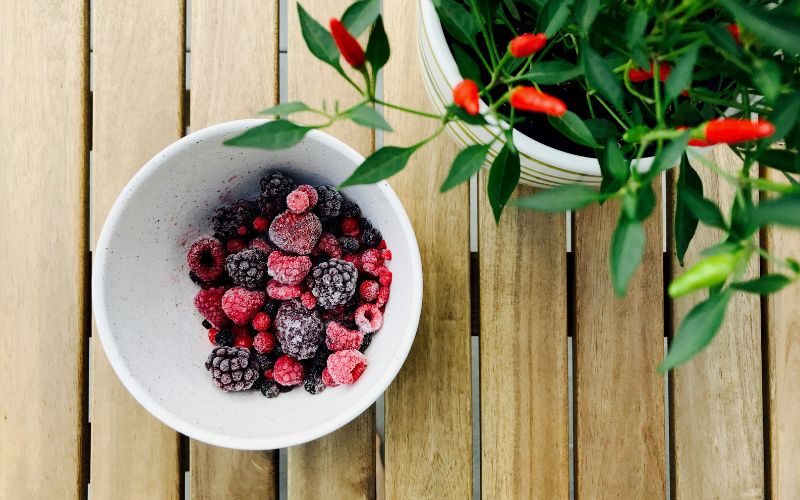
How to freeze berries? Freeze them in portions tailored for each purpose: smoothies, baking, breakfasts, sauces, and kid-friendly servings. (Image by Unsplash)
4. FAQs about Freezing Berries
Freezing questions can vary widely depending on whether you are storing fresh fruit, preparing dry grains, or comparing preservation methods. These answers clarify the most common points so you can avoid texture problems, moisture buildup, and confusion between standard freezing and freeze-drying.
Should berries be washed before freezing?
Yes. Many berries can be washed before freezing and should be drained and dried thoroughly afterward. For blueberries, NCHFP’s dry-pack method recommends freezing them unwashed and washing them before use. If you choose to rinse blueberries before freezing, dry them completely first.
How long to freeze wheat berries to kill bugs?
For grain or other dry foods that may contain pantry pests, you can freeze them at 0°F (-18°C) for at least four days to kill insects and eggs. After treatment, keep the grain in a tightly sealed container to help prevent reinfestation.
Is flash-freezing the same as freeze-drying?
No. Flash-freezing simply freezes food quickly, usually in a single layer, so individual pieces stay separate. Freeze-drying is a different process that freezes food and then removes moisture under vacuum, producing a much drier and shelf-stable result.
Can you freeze blueberries whole?
Yes, whole blueberries freeze very well. Sort them, rinse if desired, dry completely, freeze them in a single layer until firm, and then transfer them to an airtight freezer bag or container.
Can you freeze-dry berries in a regular freezer?
No, a standard household freezer cannot properly freeze-dry berries because it does not create the vacuum needed to remove frozen moisture through sublimation. True freeze-drying requires specialized equipment designed for that process.
How to freeze blue berries?
To freeze blueberries, remove damaged fruit, wash them if needed, and dry them thoroughly before placing them in a single layer on a tray. Once frozen solid, transfer them to airtight storage so they stay loose, easy to portion, and better protected from freezer burn.
5. Final Thoughts
Smart preparation can help berries keep their flavor, color, and convenience long after peak freshness. With how to freeze berries, drying the fruit thoroughly, pre-freezing in a single layer, and storing portions airtight can make later use much easier. Matching portion sizes to smoothies, baking, or breakfast also reduces waste and unnecessary thawing.
For more practical everyday tips and news, explore TAG Mobile now.
Share
TAG Blog
Stories, guides, and helpful updates for staying connected.