How to Fix Wobbly Chair Problems by Finding the Loose Spot First
Loose joints, uneven legs, worn hardware, or a slightly warped frame can all make a chair feel unstable. This guide explains how to fix wobbly chair problems by locating the loose...
Quincy D.-Aug 31, 2026
Image by Unsplash
Table of Contents
Loose joints, uneven legs, worn hardware, or a slightly warped frame can all make a chair feel unstable. This guide explains how to fix wobbly chair problems by locating the loose spot first, then choosing the right repair for screws, joints, legs, or flooring issues. Careful inspection before tightening or gluing anything can save time and help restore a steadier, safer seat.
1. Why Is My Chair Wobbly?
Chair wobble usually comes from a small structural issue rather than a completely damaged frame. Finding the source first makes the repair easier and prevents unnecessary tightening or replacement.
Loose screws or bolts: Hardware can gradually loosen with regular use, allowing the frame or legs to shift.
Weak joints: Glued wooden joints may separate over time and create movement between connected parts.
Uneven chair legs: One leg may be shorter, worn down, or slightly warped, causing the chair to rock.
Damaged brackets or connectors: Bent metal parts or cracked fasteners can reduce stability.
Uneven flooring: Sometimes the chair is fine, but an irregular floor creates the wobble.
Worn leg pads: Missing or compressed pads can change the height of one leg and make the chair feel unstable.
2. What Tools Do You Need to Fix a Wobbly Chair?
Most chair repairs only require a few basic tools, but the exact setup depends on whether the problem comes from loose hardware, weak joints, or uneven legs. For how to fix wobbly chair issues effectively, gather the right supplies before taking anything apart.
Screwdriver set: Useful for tightening loose screws on the frame, seat, brackets, or leg connections.
Adjustable wrench: Helps secure nuts and bolts that cannot be tightened with a screwdriver.
Wood glue: Best for loose wooden joints, dowels, or mortise-and-tenon connections.
Clamps: Hold glued joints firmly in position while the adhesive cures.
Rubber mallet: Helps tap wooden joints back into place without damaging the surface.
Sandpaper: Smooths rough areas or slightly adjusts uneven wooden legs.
Furniture pads or shims: Useful for correcting minor height differences between chair legs.
Clean cloth: Removes dust, old glue, and debris before reassembly.
Gather a few basic tools to tighten joints and fix a wobbly chair. (Image by Unsplash)
3. How to Fix Wobbly Chair Problems Step by Step
Chair wobble becomes much easier to solve once you identify exactly where the movement starts. Instead of tightening everything at random, inspect the frame, joints, legs, and hardware one area at a time, then use the repair that matches the problem.
Tighten Loose Screws, Bolts, and Fasteners
Start by checking every visible screw, bolt, bracket, and connector around the seat, legs, and frame. Tighten anything that has worked loose, but avoid overtightening because that can strip threads or damage wood.
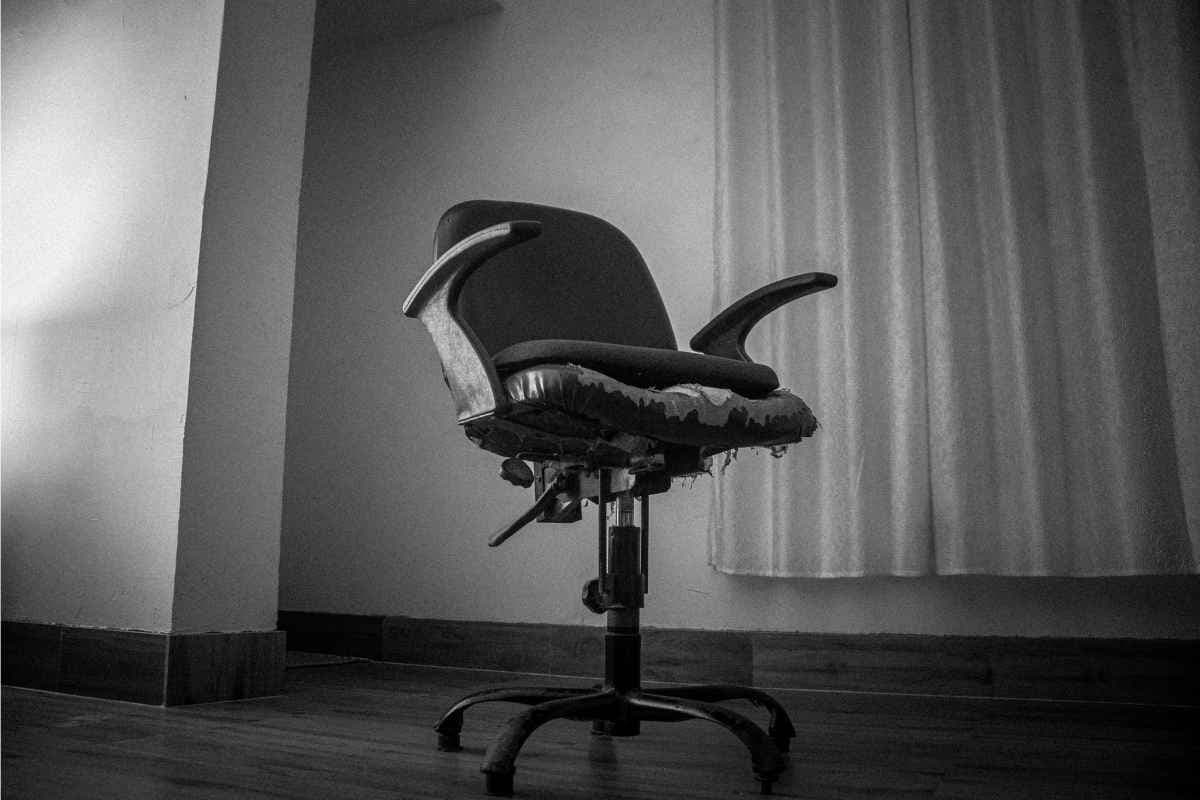
For how to fix a wobbly office chair, pay particular attention to the base, armrests, seat plate, and caster connections.
Reglue Loose Wooden Joints
Movement between wooden joints often means the original glue has weakened. Separate the joint carefully if possible, remove loose old adhesive, apply fresh wood glue, and press the parts back together. Use clamps to hold everything firmly in place until the glue cures according to the product instructions.
Correct an Uneven Chair Leg
Place the chair on a flat surface and check whether one leg sits higher or lower than the others. Minor differences can often be corrected with a furniture pad or shim. For wooden chairs, light sanding may help when one leg is slightly longer, but remove material gradually to avoid making the imbalance worse.
Repair Loose Dowels or Joint Connections
Dowels can shrink, loosen, or pull partially out of their sockets over time. Remove the affected section carefully, clean the dowel and hole, then reglue and reassemble the joint. If the dowel is cracked or badly worn, replacing it with one of the same diameter is usually more dependable.
Check the Floor Before Making Major Repairs
Sometimes the chair itself is stable, but an uneven floor makes it rock. Test the chair on another hard, level surface before modifying the legs. If the wobble disappears, use protective furniture pads or another suitable floor-leveling solution rather than cutting, sanding, or rebuilding the chair unnecessarily.
4. How to Prevent a Chair From Becoming Wobbly Again
Preventing future wobble is easier than repeatedly repairing the same loose joint or fastener. Regular checks, careful use, and small maintenance habits can help keep the frame stable for much longer.
Tighten hardware periodically: Check screws, bolts, and brackets every few months, especially on chairs that are used daily.
Avoid rocking or leaning excessively: Repeated side-to-side pressure can loosen joints, stretch fasteners, and place extra stress on the frame.
Protect wooden joints: Keep wooden chairs away from excessive moisture and heat, which can cause expansion, shrinking, or glue failure over time.
Replace worn pads or casters: Damaged feet and wheels can create uneven support and make a stable chair feel shaky.
Use the chair on a level surface: Uneven flooring can place constant pressure on certain legs and gradually loosen connections.
Check armrests and moving parts: For how to fix gaming chair wobbly arms, inspect the mounting screws and brackets regularly, then tighten loose hardware before the movement becomes more severe.
Repair small issues early: Address minor looseness as soon as you notice it rather than waiting for the frame or joints to become significantly unstable.
5. Repair or Replace? Know When the Chair Has Reached Its Limit
Some wobble can be solved with fresh glue, tightened hardware, or a small adjustment, but not every chair is worth repairing indefinitely. When how to fix wobbly chair methods stop producing a stable result, the condition of the frame and joints becomes the deciding factor.
The Frame Is Cracked
Deep cracks in the seat frame, back support, or load-bearing legs can make a chair unsafe even after tightening. Small cosmetic splits may be repairable, but structural cracks that widen under pressure usually signal that replacement is the safer option.
Joints Keep Coming Loose
Repeatedly regluing or tightening the same joint suggests the surrounding wood or hardware may already be worn. If the connection loosens again after proper repair and curing, the chair may no longer be able to hold normal weight reliably.
Multiple Parts Are Failing
One loose screw is easy to fix, but several failing legs, brackets, dowels, or support rails point to broader deterioration. Repair costs and effort can quickly add up, making a replacement more practical than rebuilding several areas of the chair.
Metal Components Are Bent or Broken
Severely bent brackets, cracked welds, or damaged office-chair bases can compromise stability even when other parts look fine. Replacement parts may help in some cases, but extensive metal damage should not be ignored because it can worsen suddenly under load.
The Chair No Longer Feels Safe
Persistent rocking, creaking, or shifting after repair is a clear warning sign. If the chair still feels unstable during normal use, stop using it until the cause is resolved or replace it rather than risking a sudden collapse.
6. FAQs about Fixing a Wobbly Chair
Chair problems often show up in different ways, from side-to-side movement to squeaking or gradual sinking. The right fix depends on whether the issue comes from loose hardware, worn joints, uneven support, or a failing height-adjustment mechanism.
How to make a chair stop wobbling?
Start by placing the chair on a level surface and checking every leg, joint, screw, and bolt for movement. Tighten loose hardware, reglue weak wooden joints, or add a small furniture pad if one leg sits slightly higher than the others.
Why does my chair creak when I move?
Creaking usually comes from loose joints, rubbing hardware, dry pivot points, or worn components moving against each other. Tightening fasteners and applying the correct lubricant to metal moving parts can help, while wooden joints may need fresh glue if movement is causing the noise.
How do I fix my chair that keeps sinking?
Office chairs that slowly sink often have a worn pneumatic gas cylinder that can no longer hold pressure. Replacing the cylinder is usually the most reliable repair, although temporary support collars or clamps can hold the seat at a fixed height.
Final Thoughts
Small furniture problems are easier to manage when repairs focus on the actual source rather than temporary fixes. Following how to fix wobbly chair steps can improve stability, prevent further wear, and make everyday use safer.
Routine maintenance also helps keep loose joints and hardware under control. With TAG Mobile’s blog, practical repair guidance can stay accessible whenever another household issue needs attention.
Share
TAG Blog
Stories, guides, and helpful updates for staying connected.