Dirt, dust, and scuff marks can build up along trim without being immediately noticeable. Understanding how to clean baseboards safely means using gentle tools, mild solutions, and controlled pressure to avoid dulling or lifting the paint.
Read on for practical methods for painted surfaces, tight corners, and stubborn marks, helping you restore a cleaner finish quickly while reducing the risk of streaks, scratches, or moisture damage.
1. Check the Baseboard Finish Before Choosing a Cleaner
Baseboards can be made from several materials and finished with paint, stain, laminate, or protective coatings.
Before learning how to clean baseboards, you should identify the surface type so you can remove dirt without causing discoloration, swelling, scratches, or peeling.
| Baseboard Type | Suitable Cleaning Method | What to Avoid |
| Painted Wood | Dust first, then wipe with a soft cloth dampened with warm water and a small amount of mild dish soap. | Abrasive scrubbers, strong chemicals, and excessive moisture that may soften or lift the paint. |
| Stained or Sealed Wood | Use a nearly dry microfiber cloth with a wood-safe cleaner, then wipe away remaining moisture promptly. | Avoid soaking the wood, harsh degreasers, and rough brushes that may damage the finish. |
| MDF (Medium-density fibreboard) | Remove dust with a vacuum or dry cloth, then clean lightly with a well-wrung microfiber cloth. | Avoid saturating edges or seams, since MDF can absorb water, swell, and lose its shape. |
| Vinyl or PVC | Wipe with diluted dish soap and a soft sponge or microfiber cloth, then dry the surface. | Solvents, highly abrasive pads, and concentrated cleaners may dull or discolor the material. |
| Unfinished Wood | Use a dry cloth, soft brush, or vacuum attachment to remove loose dust and debris carefully. | Avoid water-based cleaning, wet wipes, and liquid sprays that may stain or warp the exposed wood. |
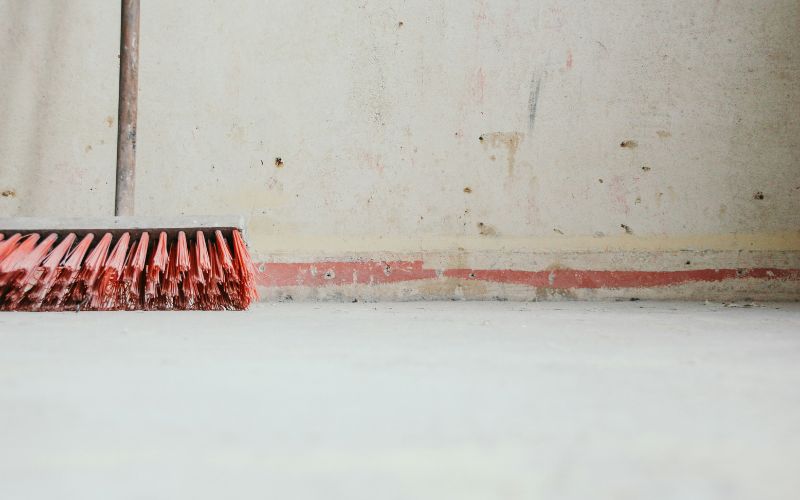
2. How to Clean Baseboards Without Bending Over
Cleaning baseboards does not have to involve kneeling or repeatedly reaching toward the floor.
Using long-handled tools and working in small sections can make the process faster, safer, and more comfortable.
- Remove loose dust: Attach a microfiber cloth, duster, or soft brush to an extendable handle and move it along the top edge and front surface of the baseboards.
- Vacuum the corners: Use a vacuum with a long crevice attachment to collect dust, pet hair, and debris from corners, seams, and the space where the trim meets the floor.
- Prepare a mild cleaning solution: Mix warm water with a small amount of dish soap, then dampen a flat microfiber mop or long-handled cleaning pad.
- Wring out excess moisture: Keep the pad slightly damp rather than wet, especially when cleaning painted wood or MDF, since excess water may damage the finish.
- Wipe in short sections: Move the pad along the baseboards using gentle, controlled strokes. Work from one end of the room to the other to avoid missing areas.
- Treat stubborn marks carefully: Wrap a soft cloth around the end of a long-handled tool, apply a small amount of mild cleaner, and rub the mark without excessive pressure.
- Dry the surface: Finish with a clean, dry microfiber pad to remove moisture and reduce the chance of streaks, swelling, or paint damage.
>>> Read More: How to Clean Window Screens: 4 Easy Methods for Every Home
3. Cleaning Mistakes That Create More Work
Small errors can spread dirt, damage finishes, or leave streaks that require another cleaning round. Avoiding these habits makes the process more efficient and helps protect both the baseboards and nearby walls.
Spraying the Wall Directly
Spraying cleaner directly onto the wall or trim can create drips that leave streaks, soften paint, or collect along seams.
Apply the solution to a cloth instead, then wipe the surface with controlled pressure. This approach limits moisture and reduces the risk of damaging surrounding finishes.
Using Too Much Water on MDF
MDF absorbs moisture easily, especially around edges, joints, and damaged areas. Excess water can cause swelling, warping, or bubbling that cannot be reversed.