How Many Liters Are in a Gallon? Quick Gallon-to-Liter Conversion Guide
Gallons and liters appear on fuel pumps, beverage containers, recipes, and product labels, yet converting between them can feel confusing when different gallon standards apply. Thi...
Quincy D.-Sep 29, 2026
Image by Unsplash
Table of Contents
Gallons and liters appear on fuel pumps, beverage containers, recipes, and product labels, yet converting between them can feel confusing when different gallon standards apply. This guide explains how many liters are in a gallon and provides a clear foundation for accurate volume calculations.
Whether comparing prices, measuring liquids, or preparing for international travel, knowing the correct conversion helps prevent costly mistakes and makes everyday quantities easier to interpret.
1. How Many Liters Are in a Gallon?
One US liquid gallon equals exactly 3.785411784 liters. For most everyday conversions, you can round this to 3.785 liters or 3.79 liters for a simpler result.
To convert gallons to liters, multiply the number of gallons by 3.785411784.
For example, 2 gallons × 3.785411784 = 7.570823568 liters. If you only need an approximate measurement, using 3.79 liters per gallon is usually enough.
Keep in mind that this conversion applies to the US liquid gallon, which is different from the imperial gallon used in some countries.
Converting gallons to liters requires only one multiplication, but selecting the correct gallon standard is essential. Follow these three steps to calculate liquid volume accurately and present the result with an appropriate number of decimal places.
Step 1: Identify the Number of Gallons
Record the number of gallons you need to convert, then verify whether the measurement uses US liquid gallons. For example, when answering how many liters are in a gallon of water, start with one US gallon. Confirming the correct gallon standard prevents confusion with the larger Imperial gallon before any calculation begins in later steps.
Step 2: Multiply by 3.78541
Multiply the US gallon value by 3.78541 to calculate its equivalent volume in liters. For a five-gallon container, the equation is 5×3.78541=18.927055 liters. Enter the full conversion factor into your calculator and check the gallon amount carefully to avoid reversing numbers or producing an inaccurate result during the entire conversion process.
Step 3: Round to the Precision You Need
Decide how many decimal places suit the purpose of your measurement before presenting the answer. For everyday use, round 18.92705 liters to 18.93 liters. Scientific, engineering, or commercial calculations may require greater precision, so retain additional digits until every calculation is complete and round only the final value rather than intermediate results for better accuracy.
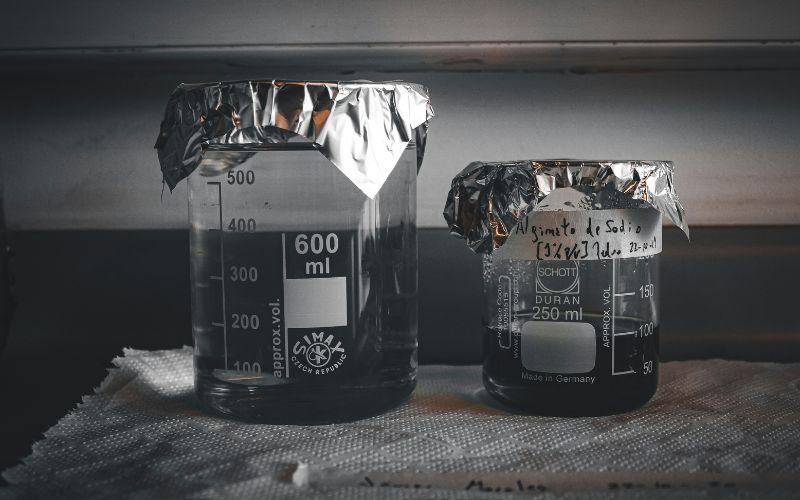
Convert gallons to liters in three simple steps using the correct gallon standard. (Image by Unsplash)
3. U.S. Gallon vs. Imperial Gallon: Quick Comparison
Shared terminology can be misleading because a gallon does not represent the same volume in every measurement system. US liquid gallons and Imperial gallons use different conversion values, creating significant discrepancies in calculations. Reviewing their liter equivalents before comparing fuel prices, beverage quantities, storage containers, or shipping capacities helps ensure results remain accurate, consistent, and suitable for their intended purpose.
Measurement
Equivalent in Liters
Common Usage
Key Detail
US liquid gallon
3.785411784 liters
Primarily used in the United States
Smaller than an Imperial gallon
Imperial gallon
4.54609 liters
Used historically in the United Kingdom and in some Commonwealth contexts
Approximately 20% larger than a US gallon
4. 5 Gallon-to-Liter Mistakes to Avoid
Simple conversion errors can create inaccurate measurements when comparing fuel prices, container sizes, or recipe quantities. Watch for these common mistakes to keep every gallon-to-liter calculation clear, consistent, and suited to its intended purpose.
Confusing US and Imperial Gallons
US and Imperial gallons represent different volumes, so they cannot share the same conversion factor. Anyone asking how many liters of water are in a gallon must first identify the standard: one US gallon equals 3.785411784 liters, while one Imperial gallon equals 4.54609 liters.
Dividing Instead of Multiplying
Gallons must be multiplied by the appropriate conversion factor to obtain liters. Dividing a gallon value by 3.78541 produces an incorrect result. Remember that one gallon contains several liters, so the converted number should be larger than the original gallon measurement.
Rounding Too Early
Rounding the conversion factor before completing a multi-step calculation can reduce accuracy, especially with larger volumes. Keep several decimal places throughout the calculation and round only the final answer according to the precision required for cooking, shipping, science, or engineering.
Forgetting to Label the Result
Numbers without units can easily be misunderstood or reused incorrectly. Always write “liters” or use the symbol “L” beside the converted value. When both gallon standards appear in the same calculation, label them as US gal or Imperial gal as well.
Using Dry Gallons for Liquid Measurements
US dry gallons and US liquid gallons are separate units with different volumes. Avoid applying the standard liquid-gallon conversion to dry commodities such as grain or produce. Check the original measurement carefully before selecting a formula, particularly when working with older documents or specialized industries.
Simple conversion errors can create inaccurate measurements when comparing fuel prices, container sizes, or recipe quantities. (Image by Unsplash)
5. FAQs about Gallons and Liters
Small differences in gallon standards can noticeably change the final volume, even in straightforward calculations. These answers clarify how many liters are in a gallon when working with half gallons, Imperial measurements, and Canadian usage.
How Many Liters Are in a Half Gallon?
Half a US liquid gallon converts to 1.892705892 liters, usually rounded to 1.89 liters for everyday measurements. By comparison, half an Imperial gallon contains 2.273045 liters. Always identify which gallon standard appears in the original quantity before converting, since selecting the wrong unit will produce a noticeably inaccurate result overall.
Why Is a U.S. Gallon Different From an Imperial Gallon?
US and Imperial gallons originated from different historical systems, which explains why their modern volumes do not match. One US liquid gallon contains 3.785411784 liters, while one Imperial gallon contains 4.54609 liters. This difference matters when converting fuel, recipes, or container capacities across countries that follow different measurement standards in practice.
Is a Canadian Gallon the Same as a U.S. Gallon?
Canada officially uses liters under the metric system rather than gallons. Historical Canadian measurements generally followed the larger Imperial gallon, while US-sized gallon containers may still appear on imported products, making the label important.
Final Thoughts
Every accurate conversion begins by identifying whether the measurement uses US or Imperial gallons. Once that distinction is clear, answering how many liters are in a gallon becomes a simple multiplication.
TAG Mobile’s blog keeps practical guides and everyday information conveniently within reach wherever questions arise. Careful unit labels and final-step rounding will help prevent avoidable measurement errors.
Share
TAG Blog
Stories, guides, and helpful updates for staying connected.