How Long Does Canned Food Last? Shelf Life & 5 Storage Guide
Canned foods can stay useful in the pantry for very different amounts of time depending on the product, storage conditions, and whether the container has already been opened. The a...
Quincy D.-Oct 26, 2026
Image by Unsplash
Table of Contents
Canned foods can stay useful in the pantry for very different amounts of time depending on the product, storage conditions, and whether the container has already been opened. The answer to how long does canned food last also changes when comparing commercially canned products, refrigerated leftovers, and foods canned at home.
Knowing the relevant timelines and recognizing signs of spoilage can help you decide what may still be suitable to eat and what should be discarded.
1. How Long Does Canned Food Last?
Commercially canned foods may remain safe beyond their best-quality dates when stored properly in intact containers, although their overall quality can decline over time.
So, how long does canned food last? USDA guidance generally separates canned goods into two broad categories:
High-acid canned foods: Best quality generally lasts 12-18 months when unopened and properly stored.
Low-acid canned foods: Best quality generally lasts 2-5 years when unopened and properly stored.
2. What Are the Three Clocks of Canned Food Shelf Life?
Canned food has different storage timelines depending on whether it remains sealed, has been opened, or was preserved at home.
Clock 1: Unopened Canned Food
Commercially canned food generally has the longest storage life while the container remains unopened, intact, and properly stored.
When considering how long does canned food last, it is useful to distinguish between safety and the period during which the product maintains its best quality.
High-acid foods such as tomatoes and many fruits typically maintain best quality for about 12-18 months, while low-acid foods such as meat and most vegetables can maintain best quality for roughly 2-5 years.
Clock 2: Opened Canned Food
Once opened, canned food loses the protection provided by its commercial seal and should no longer be treated as shelf-stable.
Refrigerate leftovers promptly and keep them covered to reduce contamination and preserve quality. Refrigerated storage time varies depending on the particular food rather than following one universal rule.
For example, some opened canned foods may remain suitable for several days under proper refrigeration, while others have different recommended limits.
Clock 3: Home-Canned Food
Home-canned foods require validated processing methods because mistakes during preservation can allow dangerous microorganisms to survive or grow.
For anyone asking how long does home canned food last, properly processed and stored home-canned foods are generally recommended for use within about one year for best quality.
Safe storage begins with following tested canning recipes and using the correct processing method for the food. Before opening a jar, check for seal failure or other signs of spoilage. Discard any questionable home-canned food safely without tasting it.
Printed dates are only one part of evaluating canned food; the condition of the container and its contents can reveal more immediate safety concerns.
If anything looks abnormal, do not taste the food to determine whether it is safe.
Bulging or Swollen Cans: Indicates gas buildup from microbial activity. Discard safely without opening or tasting.
Leaking or Severely Damaged Containers: Avoid cans with leaks, punctures, rust, or compromised seams, as the seal is broken.
Spurting Liquid or Foam When Opened: A clear sign of potential spoilage. Keep your face away when opening suspicious containers and discard properly.
Unusual Odor or Appearance: Watch for mold, discoloration, or off-smells. However, remember that dangerous contamination isn’t always visible or odorous.
Broken Seal on Home-Canned Jars: Loose lids, leaks, or bulging seals mean the food is unsafe. Never taste test home-canned food, as botulinum toxin cannot be detected by smell, sight, or taste.
4. How to Store Canned Food for Better Quality?
When considering how long does canned food last, keeping track of storage conditions and pantry organization ensures products hold up exceptionally well over time.
Keep Cans in a Cool, Dry Place
Store unopened cans in a cool, dry area away from excessive heat and moisture to protect container integrity and food quality.
Ideal location: Cabinets and pantries located far from ovens, stoves, heating pipes, and damp areas.
Prevent heat damage: High temperatures can accelerate quality deterioration over time.
Avoid moisture: Excess humidity can encourage external rust, which may eventually compromise the seal.
Avoid Extreme Temperature Changes
Repeated exposure to excessive heat or freezing conditions can negatively affect canned food quality and potentially damage containers.
Avoid unstable locations: Keep cans out of garages, sheds, or areas close to heat-producing appliances.
Minimize temperature swings: Large temperature fluctuations weaken both the container structure and product quality.
Maintain indoor stability: Consistent indoor storage conditions provide the best environment for long-term preservation.
Rotate Older Cans to the Front
Organize your pantry so older products are used before newer purchases, following a first-in, first-out approach.
Smart stocking: Place recently purchased cans behind existing stock to keep older items accessible.
Prevent forgotten stock: Reduces the chance of items expiring hidden at the back of the shelf.
Maximize flavor and texture: Helps you enjoy canned foods while their quality is still at its peak.
Check Containers During Storage
Inspect your canned goods periodically rather than waiting until you are ready to open and use them.
Regular checks: Look for bulging, leaks, severe dents, or significant rust.
Early detection: Catching damage early prevents leaks from contaminating nearby products.
Pantry maintenance: Keeping questionable cans out ensures your pantry stays clean and food remains safe.
Refrigerate Opened Food Promptly
Once commercially canned food is opened, treat the remaining contents as perishable rather than shelf-stable.
Temperature control: Refrigerate leftovers promptly at 40°F (4°C) or below and keep them tightly covered.
Transfer containers: Move leftovers to a clean glass or plastic storage container for best quality.
Easy tracking: Storing opened food in clear containers makes labeling and tracking storage time much easier.
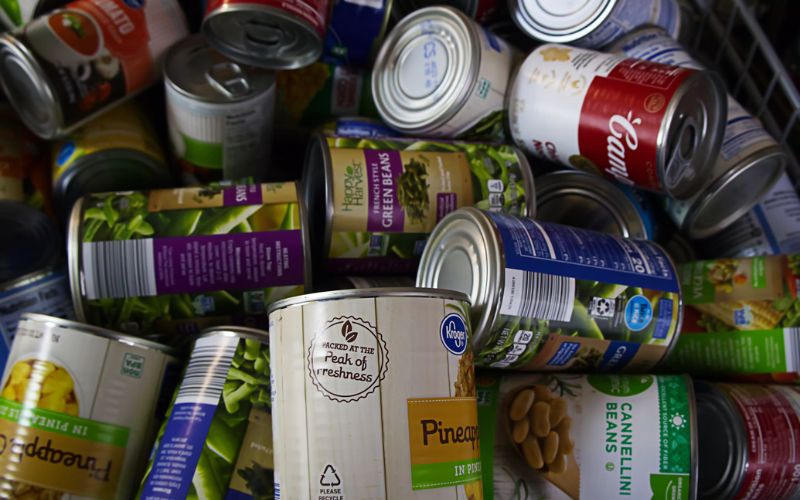
Store canned food in a cool, dry place and check container condition to maintain quality longer. (Image by Unsplash)
5. FAQs About Canned Food Using Time
Dates printed on canned foods can be confusing because quality dates do not always function as automatic safety deadlines.
Container condition, food type, processing method, and storage history should all be considered when deciding whether a canned product is appropriate to use.
How long does canned food last after expiration date?
Many dates on commercially canned foods indicate best quality rather than the exact day the food becomes unsafe. Properly stored cans may remain usable beyond that date if their seals and containers remain intact, but quality can decline over time and any bulging, leaking, severe rust, or suspicious damage warrants disposal.
Is canned food safe after 5 years?
Some commercially canned low-acid foods may remain safe for long periods when properly processed, continuously stored under suitable conditions, and kept in intact containers, although quality generally declines with time.
Five years should not be treated as a universal safety guarantee, so inspect the container and consider its storage history before use.
Can you refrigerate food in an opened can?
Yes, USDA guidance indicates that unused portions of canned food can be refrigerated in the can, although transferring the food to a clean glass or plastic container may better preserve quality and flavor.
Keep leftovers covered, refrigerate them promptly, and follow the recommended refrigerator storage time for the specific food.
6. Final Thoughts
Canned foods can remain pantry staples for a long time, but dates alone should not determine whether a product is suitable to use. With how long does canned food last, pay attention to storage conditions, whether the container has been opened, and warning signs such as leaking, bulging, or unusual odors.
Properly refrigerating opened leftovers also matters for food safety. You also can explore TAG Mobile’s service and device options for affordable access to food-storage guidance and other everyday resources.
Share
TAG Blog
Stories, guides, and helpful updates for staying connected.