Emergency Housing for Single Moms: Where to Get Help Right Now
Facing a sudden housing crisis can place immense strain on a single-parent household. Finding emergency housing for single moms is often the first critical step toward securing a s...
Quincy D.-Sep 28, 2026
Image by Unsplash
Table of Contents
Facing a sudden housing crisis can place immense strain on a single-parent household. Finding emergency housing for single moms is often the first critical step toward securing a safe, temporary shelter while working toward long-term stability.
Below are answers to common questions about finding immediate support when you need it most.
1. What is 24-Hour Emergency Housing for Single Moms?
When a family suddenly loses a safe place to stay, emergency accommodation can provide temporary stability while longer-term housing is arranged.
24-hour emergency housing for single moms offers temporary accommodation around the clock, often with additional support for immediate safety and housing needs.
2. 6 Emergency Housing Programs and Resources for Single Moms
Immediate housing help can come from different local systems depending on the nature of the housing crisis.
Families should contact more than one resource because local availability and eligibility can change quickly.
211 Emergency Housing Referrals
211 connects people with local housing and other essential community resources. Local 211 specialists can provide referrals based on your circumstances and available community resources.
For mothers searching for emergency housing for single moms near me, 211 can be a practical first step because it identifies local providers rather than sending families through one national housing application.
Family Promise
Family Promise operates a national network focused on preventing and addressing family homelessness. Its affiliates use different shelter models depending on local community resources and program structure.
Local affiliates may also connect families with prevention, stabilization, and housing-related services.
Since programs differ between communities, single mothers should contact the nearest Family Promise affiliate to ask about current availability and eligibility.
The Salvation Army Emergency Shelter and Housing Services
Services can include temporary shelter, help addressing rent or utility crises, and referrals to programs designed to improve longer-term financial and housing stability.
Availability varies by location, so families should contact the nearest center directly. Some branches may have family-specific shelter space, while others may connect applicants with partner organizations when beds or housing assistance are unavailable.
HUD Continuum of Care (CoC) / Coordinated Entry
HUD’s Continuum of Care system coordinates local homelessness services and funds programs that help individuals and families move toward stable housing.
Communities commonly use coordinated entry to assess needs, prioritize households facing the greatest housing crisis, and connect them with appropriate shelter or rehousing resources.
Families seeking emergency housing assistance for single moms can use HUD’s Find Shelter tool or contact their local CoC provider to locate emergency, transitional, or longer-term homelessness services.
Domestic Violence Shelters and Victim Service Providers
Domestic violence shelters provide confidential housing and safety-focused support for survivors who need to leave an abusive environment.
Local providers may offer emergency shelter and other safety-focused support for survivors.
The National Domestic Violence Hotline can also help survivors locate nearby providers around the clock. In situations involving immediate danger, emergency services should be contacted first.
Local Community Action and Homelessness Prevention Programs
Community Action Agencies often participate in homelessness-prevention and rapid-rehousing efforts tailored to local needs.
Depending on funding, services may include housing assistance and other support designed to prevent or resolve homelessness.
These programs are locally managed, so eligibility and availability can differ significantly by county or city.
Contacting a nearby Community Action Agency can uncover assistance that may not appear prominently in national housing directories.
3. What Documents Should Families Bring to a Shelter?
Shelter intake can move more smoothly when important records are easy to verify.
Families seeking emergency housing for single moms should bring as much documentation as possible, while remembering that some shelters may still help during an immediate crisis even if not every document is available.
Identification: Bring a government-issued photo ID for each adult, such as a driver’s license, state ID, or passport.
Family verification: Birth certificates, Social Security cards, school records, or other documents may be requested to confirm children in the household.
Proof of income: Recent pay stubs, tax documents, benefit letters, child-support records, or statements showing TANF, SSI, or other assistance can help establish eligibility.
Proof of housing crisis: Useful documents may include an eviction notice, notice to quit, homelessness verification, police report, protective order, or records showing unsafe living conditions.
Proof of residency: A recent utility bill, previous lease, government mail, or other correspondence can help confirm current or recent residence.
Medical or disability records: If someone in the household needs accommodations, relevant medical documentation may help shelter staff arrange appropriate services.
Bring essential identification, family, income, and housing records to help make shelter intake smoother. (Image by Unsplash)
4. Why a Working Phone Matters During a Housing Emergency
Shelter openings, housing appointments, caseworker updates, and landlord calls can arrive with little notice during a housing crisis.
Keeping an active phone makes it easier to respond quickly, upload documents, follow applications, and stay reachable while moving between temporary locations.
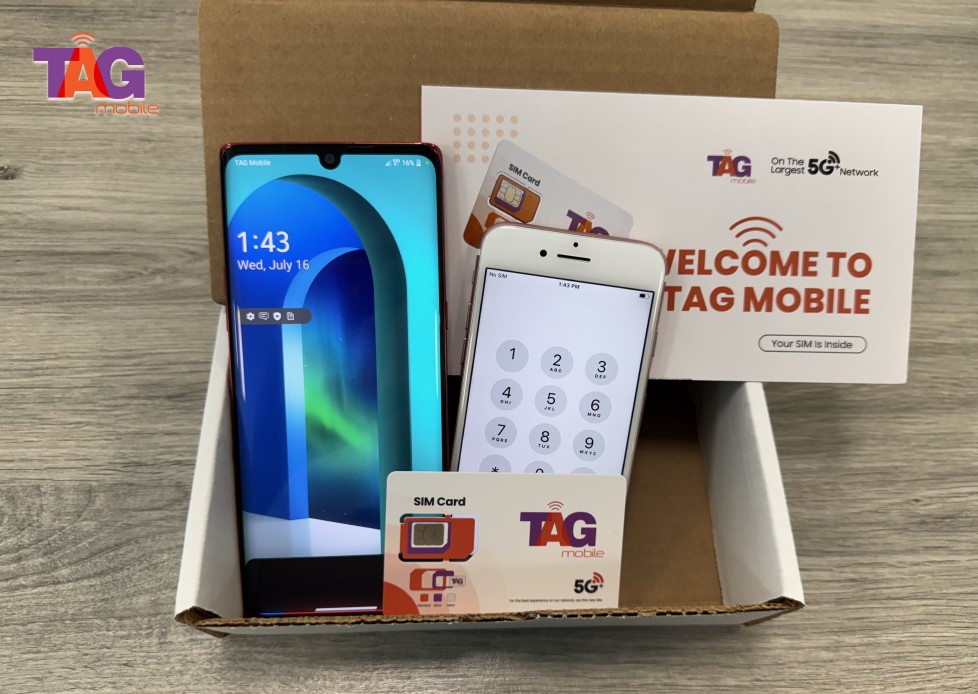
TAG Mobile is a U.S. wireless provider and eligible telecommunications carrier that offers Lifeline-supported service to qualifying households.
Eligible customers may receive provider-specific service and device offers from TAG Mobile. While the provider offers additional service features and device options to eligible customers, exact benefits vary by state and availability. Therefore, checking the offer tied to your ZIP code is important.
Once approved, applicants can claim these perks:
Zero-cost monthly data, depending on the plan choice and location.
Unlimited talk and text for essential communication.
Free international calling to more than 200 countries and territories.
Free or discounted phones and delivery may be available to eligible customers, depending on location and current offers.
Additional calling features may be available depending on the current service offer.
Lifeline applicants generally qualify in one of two ways:
Income-based eligibility: Household income is at or below 135% of the Federal Poverty Guidelines.
Program-based eligibility: You or a qualifying household member participates in SNAP, Medicaid, SSI, Federal Public Housing Assistance, Veterans Pension or Survivors Benefit, or certain Tribal programs.
TAG Mobile provides Lifeline-supported service to eligible customers in participating areas.
Note: Eligibility varies by state and program. Offers depend on availability and qualifications. TAG Mobile operates under the federal Lifeline Program as an Eligible Telecommunications Carrier (ETC). Service is non-transferable and limited to one service per household.
5. FAQs about Emergency Housing for Single Moms
Shelter availability, wait times, and eligibility can shift from one provider to another, making the search confusing during an urgent situation.
What if family shelters near me are full?
Ask the shelter or local coordinated-entry provider about other emergency or housing-stabilization options.
Calling several local providers and 211 can also uncover options outside your immediate neighborhood.
Can 211 help me find a shelter tonight?
Yes. 211 can connect callers with local shelter and housing resources and generally maintains current information about services in the community.
Actual bed availability can change quickly, so contact the referred shelter directly to confirm space before traveling there.
Is Section 8 emergency housing?
No. The Housing Choice Voucher Program, often called Section 8, is a long-term rental assistance program rather than an emergency shelter service.
Waiting lists can be lengthy, so families needing immediate housing should also seek local emergency or homelessness-prevention resources.
How long can a family stay in emergency housing?
There is no universal stay limit. Some shelters allow only a few nights or weeks, while others provide longer stays as families work with case managers toward transitional or permanent housing. Rules depend on the provider and local program conditions.
6. Final Thoughts
When living conditions vanish unexpectedly, securing emergency housing for single moms requires knowing exactly where to apply and which local agencies to contact. Because program availability depends on regional resources, acting quickly and maintaining active communication with program caseworkers is essential.
For ongoing support during this transition, eligible families can also check TAG Mobile for Lifeline-supported phone service and current device offers.
Share
TAG Blog
Stories, guides, and helpful updates for staying connected.