Affordable Housing for Single Moms: How to Find a Home Within Your Budget
Housing can place serious pressure on a single-parent budget when essential living costs add up. Affordable housing for single moms may be available through different types of rent...
Quincy D.-Sep 28, 2026
Photo by TAG Mobile
Table of Contents
Housing can place serious pressure on a single-parent budget when essential living costs add up. Affordable housing for single moms may be available through different types of rental assistance and affordable housing programs.
Check income limits, rent requirements, waiting lists, and location rules to identify options that fit your household.
1. What Does “Affordable Housing” Actually Mean?
Affordable housing is generally measured by how much of a household’s income goes toward housing costs.
HUD commonly uses 30% of income as a benchmark, but actual affordability also depends on utilities, family size, location, and available assistance.
Housing cost share: Rent or mortgage payments should ideally stay near or below 30% of household income.
Utilities: Utility costs can affect whether a unit is affordable.
Household income: Many programs use income limits tied to local median income and family size.
Location: Rent levels and eligibility thresholds can vary significantly by location.
Assistance type: Different housing assistance programs can reduce housing costs in different ways.
Housing costs above 30% of household income are generally considered a housing cost burden. (Image by Unsplash)
2. 5 Common Types of Affordable Housing
Housing assistance is not limited to one program or one type of property. Single mothers may qualify for different housing assistance programs depending on their income, household circumstances, location, and local availability.
Local public housing agencies administer the vouchers, and approved families can choose qualifying apartments, townhouses, or single-family homes in the private market.
For single parents exploring affordable housing for single moms, this program can offer more flexibility than housing tied to one building.
However, waiting lists are often long, and local agencies determine eligibility and availability.
Public Housing
Public housing provides lower-cost rental homes managed through local public housing agencies.
Local agencies handle applications and determine eligibility under program rules.
Unlike a tenant-based voucher, public housing is tied to specific developments or units.
Availability can be limited, so applicants may want to contact more than one housing authority where program rules allow.
Privately Owned Subsidized Apartments
Some privately owned apartment communities receive federal housing assistance that allows eligible tenants to pay reduced rents.
Assistance is usually attached to specific properties or units rather than following the tenant to any rental they choose.
This option can work well for families who find an available subsidized property in a suitable area.
Applicants should confirm the property’s eligibility rules and whether the rental assistance is tied to the property or unit.
Income-Restricted Apartments
Income-restricted apartments reserve units for households that fall below specified income limits, often based on local area median income.
Rent may be set below market levels, but the exact formula and eligibility rules depend on the property and funding program.
These units are not always the same as Section 8 housing. Some properties receive support through federal housing programs such as HOME.
States and local governments can use HOME funds to support affordable housing activities.
USDA Rural Affordable Housing
USDA Rural Development supports affordable housing in eligible rural communities through rental and homeownership programs.
Depending on the program, assistance may help lower-income households access affordable apartments or reduce barriers to purchasing a home in qualifying areas.
This option is especially relevant for families willing to live outside major metropolitan centers.
Rural eligibility is location-specific, so checking the property address and household income against current USDA requirements is essential before applying.
3. Where to Find Housing Assistance by State?
Housing programs vary by location, so the best starting point is usually the agency serving your state or city.
When searching for affordable housing for single moms near you, compare local housing programs and waitlist options rather than relying on a single source. Below are some examples that you can refer to while looking for support near you.
The Housing Choice Voucher Program can help eligible low- and very low-income households afford private-market housing.
HUD also provides housing resources for New Jersey residents.
Single mothers should check county-level waiting lists as well, because application availability can differ by housing authority and location.
Affordable Housing for Single Moms in NYC
New York City offers several affordable housing routes through NYC Housing Connect and the New York City Housing Authority.
Housing Connect lists affordable rentals and homeownership opportunities across all five boroughs, with eligibility based on household size and income for each property.
NYCHA separately administers public housing and Section 8 programs. Applicants should review current application status and requirements directly, since lotteries, waitlists, and available units change over time.
Affordable Housing for Single Moms in Philadelphia
Philadelphia residents can check the Philadelphia Housing Authority for local housing assistance and affordable rental resources.
According to PHA, its general Housing Choice Voucher waitlist is closed, so applicants should also review alternative affordable-housing providers and city rental-assistance resources.
PHA also provides information about other affordable housing providers and local rental-assistance resources.
Checking these alternatives can be especially useful while major voucher or public-housing waiting lists remain unavailable or heavily backlogged.
4. What Mistakes Slow Down Housing Applications?
Small application errors can turn an already competitive housing search into an even longer process.
Preparing documents early, responding quickly, and following each program’s instructions closely can help prevent avoidable delays.
Submitting Incomplete Documents
Missing required documents can delay or prevent an application from moving forward.
Review the checklist before submitting and make sure all required documents are current and consistent with your application.
Ignoring Waiting-List Updates
Housing authorities may require applicants to confirm continued interest or update contact information while waiting.
Missing an email, letter, or deadline can result in removal from the list, so check messages regularly and report address or phone number changes promptly.
Reporting Income Incorrectly
Inaccurate income information can trigger extra verification or delay approval.
Report household income according to the program’s instructions and provide any required documentation instead of estimating amounts or leaving required fields blank.
Applying to Only One Program
Relying on a single housing authority or property can significantly limit your chances. When permitted, apply to multiple eligible housing options, especially in areas with long waiting lists.
Missing Local Eligibility Rules
Programs can have different eligibility and property requirements. Check the requirements before applying so you do not spend time on assistance that does not match your location or financial situation.
5. How Can Lowering Phone Bills Help With Housing Costs?
Reducing a recurring phone bill can leave more room in the monthly budget for essential expenses.
For households already stretching one income across several essential expenses, even a smaller wireless payment can make budgeting more manageable.
One of the most reliable support now is the Lifeline program, a federal benefit that lowers the cost of qualifying phone or internet service.
Households may generally qualify either through income at or below 135% of the Federal Poverty Guidelines or through approved programs such as SNAP, Medicaid, SSI, Federal Public Housing Assistance, Veterans Pension or Survivors Benefit, and certain Tribal programs.
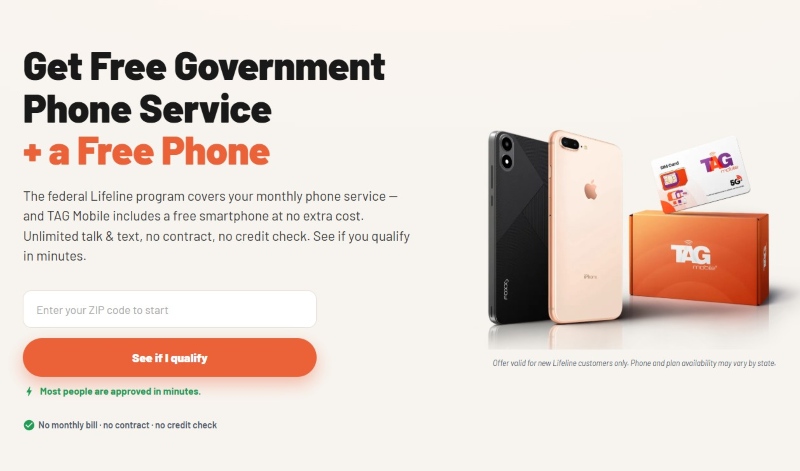
TAG Mobile is a U.S. wireless provider participating in Lifeline and offers qualifying customers no-monthly-cost service alongside additional device and communication benefits. Through the carrier, households trying to reduce recurring expenses can get these features:
Free data each month, depending on state and plans.
Unlimited talk and text for qualifying users.
Free international calling to more than 200 countries and territories.
Free delivery plus free or discounted phones, with models and pricing varying by location and inventory.
No long-term contract, plus options such as Wi-Fi calling, voicemail, caller ID, call waiting, and 3-way calling.
Applying for a free or discounted phone through TAG Mobile starts with Lifeline eligibility rather than device selection alone. The process is designed to confirm eligibility first, then show the service and phone options available in your area.
Eligible households can check qualification online before selecting a phone, which makes it easier to see exactly which plan and device offers apply to their ZIP code.
As an Eligible Telecommunications Carrier, TAG Mobile provides Lifeline-supported free phone services to eligible customers.
Note: Eligibility varies by state and program. Offers depend on availability and qualifications. TAG Mobile operates under the federal Lifeline Program as an Eligible Telecommunications Carrier (ETC). Service is non-transferable and limited to one service per household.
6. FAQs about Affordable Housing for Single Moms
Housing assistance can look very different depending on where you live, which program you apply for, and how much funding is available locally.
How long are affordable housing waiting lists?
Waiting times vary widely by program and location. Some households may wait months or years, while others may face closed waiting lists. Some housing authorities close their lists entirely when applications exceed capacity.
What’s the difference between Section 8 and public housing?
Section 8 usually provides a voucher that helps eligible households rent from private landlords, while public housing places residents in properties managed by a housing authority. Both programs are income-based, but the housing choice and application process differ.
Can I apply to more than one housing authority?
Yes, in many cases. Applying to multiple eligible housing authorities can improve your chances, especially when one area has a long or closed waiting list. Each agency has its own rules, so residency requirements and application procedures should be checked separately.
7. Final Thoughts
A broader search can improve your chances of finding stable housing instead of depending on a single waiting list. Affordable housing for single moms may be available through different housing assistance programs, each with its own eligibility and location requirements.
Eligible households may also qualify for TAG Mobile’s Lifeline-supported service, which can help reduce monthly phone expenses.
Share
TAG Blog
Stories, guides, and helpful updates for staying connected.