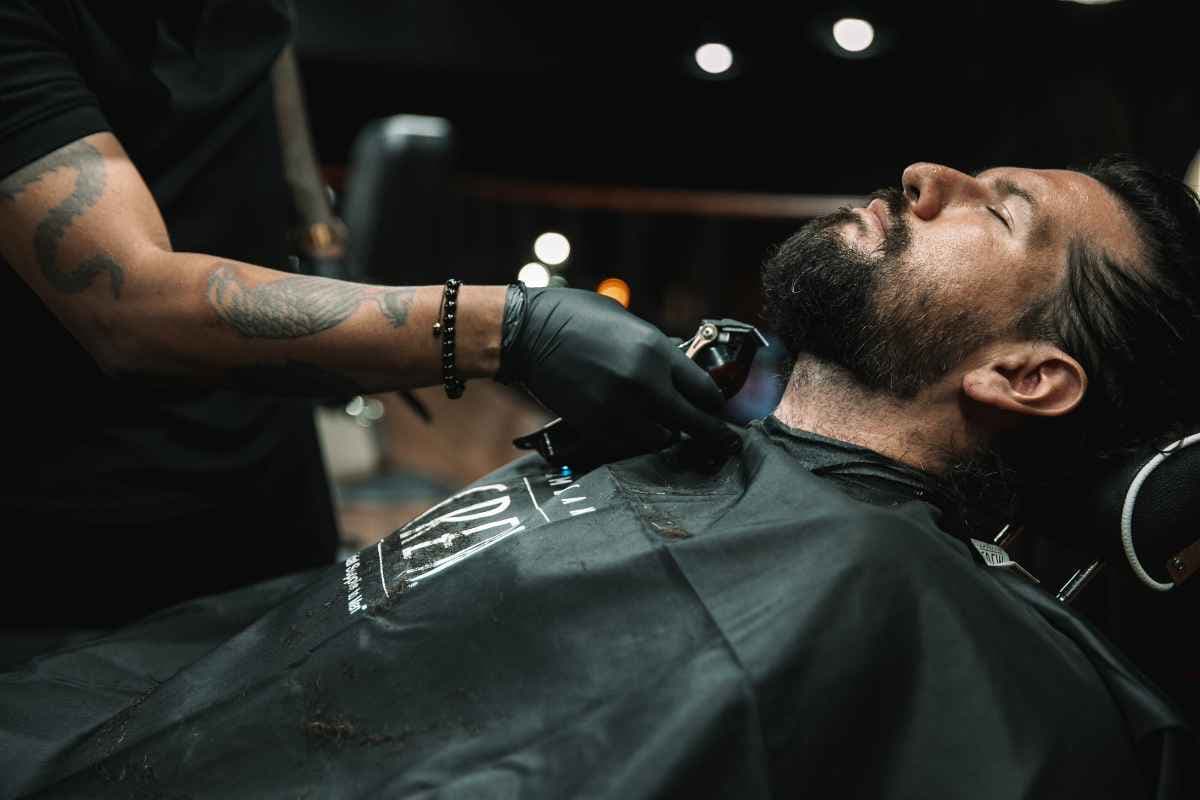
Beard shape can change how defined, balanced, or elongated your face appears, making length and contour just as important as neatness.
Learning how to trim a beard involves choosing proportions that complement your face shape, setting consistent guard lengths, refining the cheek and neckline, and removing uneven growth. Thoughtful trimming helps create a cleaner structure while keeping the beard natural, manageable, and suited to your overall style.
1. How to Match Your Beard Shape to Your Face Type
Face shape should guide where you keep extra length, reduce bulk, and create sharper lines. Matching beard proportions to your natural features can make the jawline look stronger while keeping the overall style balanced.
- Round face: Keep the sides shorter and leave more length through the chin to create a longer, more defined appearance.
- Square face: Reduce sharpness around the jaw with slightly softer edges while maintaining controlled length at the chin.
- Oval face: Most beard styles work well, so focus on even density, clean lines, and proportions that suit your preferred length.
- Rectangular face: Avoid excessive chin length and keep more fullness along the sides to prevent the face from appearing even longer.
- Heart-shaped face: Add fullness around the chin and lower jaw while keeping the cheeks relatively neat to create better balance between the forehead and jawline.
2. How to Trim a Beard Like a Professional Barber
Clean, well-shaped facial hair depends on more than simply running a trimmer over the beard. Better results come from controlling length gradually, keeping both sides balanced, and refining the edges in a way that works with your natural growth pattern and face shape.
How to Trim a Long Beard
Long beards require controlled shaping to preserve fullness without creating bulky sides or uneven ends. Start conservatively, then refine the outline once the main length is balanced.
- Wash, dry, and comb the beard downward.
- Begin with a longer guard than your target length.
- Trim the sides gradually to control width.
- Leave extra length at the chin when it suits the face shape.
- Use scissors to remove isolated flyaways.
- Compare both sides frequently for symmetry.
- Refine the cheek line and neckline last.
For how to properly trim a beard, removing small amounts at a time gives you more control and reduces the risk of cutting one section noticeably shorter than another.
How to Trim a Short Beard
Short beards look best when the length stays consistent, and the transition around the sideburns appears natural. Precise edges can sharpen the style without making it look overly sculpted.
- Comb the beard to expose uneven hairs.
- Select a guard slightly longer than the desired finish.
- Trim evenly across the cheeks, jaw, and chin.
- Use shorter settings gradually when creating a fade.
- Blend the sideburns into the beard.
- Tidy stray hairs around the mustache and cheeks.
- Finish by defining the neckline.
How to Trim a Beard Neckline
Neckline placement can make the entire beard appear cleaner and more structured. Keeping the boundary below the jaw preserves fullness while removing unwanted growth from the neck.
- Face forward with your head in a natural position.
- Locate a point roughly one to two fingers above the Adam’s apple.
- Create a gentle curve toward the area beneath each ear.
- Trim the hair below this boundary.
- Keep the center slightly lower than the sides.
- Avoid following the jawline too closely.
- Clean remaining stubble below the finished neckline.
3. Essential Grooming Tools Every Man Should Use
Consistent beard care becomes much easier when each tool has a clear purpose, from controlling length to defining sharp edges. Choosing the right equipment also helps reduce uneven trimming, tugging, and unnecessary passes over the same area.
Beard Trimmer
A quality beard trimmer is the foundation of most grooming routines because adjustable guards make it easier to control length across different areas. When learning how to trim a beard, start with a longer guard and shorten gradually to avoid removing more hair than intended.
Beard Scissors
Small grooming scissors provide better precision for stray hairs, uneven ends, and areas that are difficult to shape with clippers. They are especially useful for longer beards, mustaches, and final detailing where removing individual hairs creates a cleaner result without changing the overall length.
Beard Comb
A beard comb helps separate hairs, reveal uneven growth, and guide longer sections into their natural position before trimming. Combing during the process also makes it easier to compare both sides and identify hairs extending beyond the desired beard shape.
Beard Brush
A boar-bristle or suitable grooming brush distributes natural oils through the beard while directing hairs into a more consistent pattern. Brushing regularly can reduce a messy appearance and makes the beard easier to evaluate before deciding where additional trimming or shaping is needed.
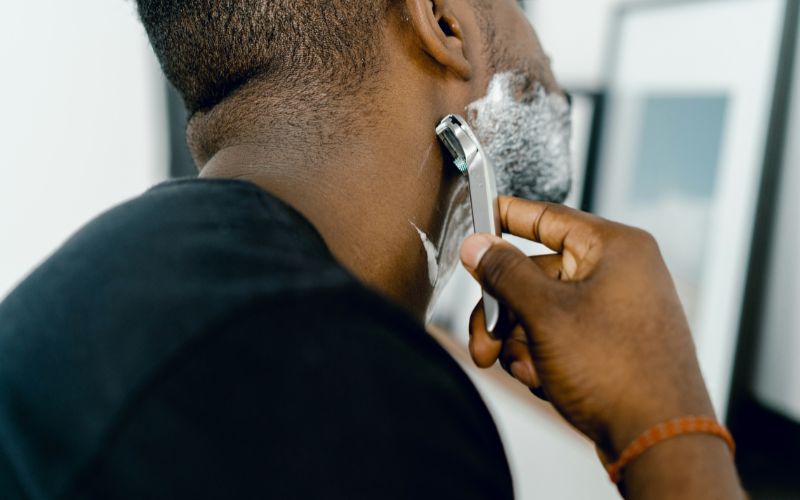
Detail Trimmer or Razor
Precise edging tools help define the neckline, cheek line, mustache border, and other small areas where a full-size trimmer may be difficult to control. Use light pressure and follow the natural beard shape rather than cutting aggressively into dense growth, which can make the outline look unnatural.