How to Clean Shower Glass: Remove Cloudiness, Soap Scum, and Hard Water Stains
Shower glass can lose its clear finish surprisingly quickly as water spots, soap residue, and everyday grime collect on the surface. If you are figuring out how to clean shower gla...
Quincy D.-Sep 30, 2026
Image by Unsplash
Table of Contents
Shower glass can lose its clear finish surprisingly quickly as water spots, soap residue, and everyday grime collect on the surface. If you are figuring out how to clean shower glass, the right method depends on what has caused the cloudy or streaky appearance in the first place.
This guide covers suitable cleaners, gentle tools, and practical techniques for removing buildup without scratching the glass or damaging nearby finishes.
1. What Supplies Are Needed to Clean Glass Shower Doors Safely?
Successful cleaning begins with nonabrasive tools and a solution suited to the buildup covering the glass. Before following any method for how to clean shower glass, check whether the door has a protective coating and review its manufacturer’s care instructions.
Supply
Main Purpose
Microfiber cloths
Wipe cleaner across the glass and dry the surface without leaving lint or streaks.
Non-scratch sponge
Loosen soap scum and grime without using harsh scouring pads.
Spray bottle
Distribute homemade or diluted cleaning solutions evenly.
Mild dish soap
Break down body oils, shampoo residue, and light soap scum.
Dissolve mineral film and hard water residue on compatible surfaces.
Commercial shower-glass cleaner
Treat heavier buildup when mild household cleaners are insufficient.
Squeegee
Remove water after rinsing and reduce new spots or streaks.
Rubber gloves
Protect hands from prolonged contact with cleaners and residue.
Distilled water
Prevent additional minerals from being deposited during the final rinse.
Soft toothbrush
Clean corners and edges without scratching the main glass surface.
2. How to Clean Shower Glass?
Cleaner strength should match the condition of the door rather than starting with the harshest product available. Test any solution in an inconspicuous spot first, especially when the glass has a factory-applied protective coating.
Method 1: Warm Water and Dish Soap for Light Buildup
Mix several drops of mild dish soap with warm water in a spray bottle or small bucket. Apply the solution generously, allow it to soften surface residue for several minutes, and wipe the glass using a damp microfiber cloth or non-scratch sponge.
Rinse thoroughly with clean water to prevent detergent streaks. Finish by pulling a squeegee from top to bottom, then polish the edges with a dry microfiber cloth until the entire door looks clear.
Method 2: Vinegar Solution for Mineral Film
Combine equal parts distilled white vinegar and warm water in a spray bottle, then mist the affected glass evenly. Let the solution remain for approximately 10 minutes so its acidity can soften mineral deposits before wiping gently with a non-scratch sponge.
When considering how to clean a glass shower door, avoid vinegar on nearby natural stone or acid-sensitive finishes. Never combine it with chlorine bleach, and rinse metal hardware promptly to limit possible discoloration or surface damage.
Method 3: A Dedicated Shower-Glass Cleaner for Heavier Buildup
Select a cleaner labeled for shower glass and compatible with any protective coating on the door. Ventilate the bathroom, wear gloves, apply the product as directed, and respect the recommended contact time rather than allowing the cleaner to dry.
Agitate stubborn areas with a soft sponge, rinse away every trace of residue, and dry the surface completely. Repeat only when the label permits, since excessive scrubbing or stronger chemicals may damage coatings, seals, frames, or decorative finishes.
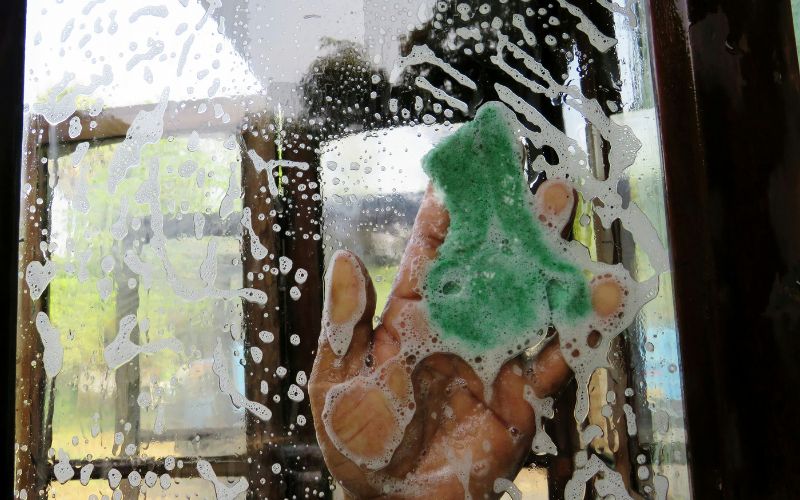
Clean shower glass with three methods based on the type and severity of buildup. (Image by Unsplash)
3. How to Clean Glass Shower Doors With Hard Water Stains?
Hard water contains minerals such as calcium and magnesium that can leave chalky spots or a cloudy film after droplets evaporate. Removing these deposits requires enough contact time to soften the scale without exposing surrounding materials to acid unnecessarily.
Step 1: Inspect the Door and Nearby Materials
Check whether the glass has a protective coating and identify nearby stone, metal, grout, or seals that may react to acidic cleaner. Before trying how to clean shower glass doors, protect vulnerable surfaces and follow the manufacturer’s care instructions.
Step 2: Rinse Away Loose Residue
Rinse the door with warm water to remove dust, hair, and loose soap residue. This preparation allows the cleaning solution to contact the mineral film directly instead of becoming diluted or obstructed by surface debris.
Step 3: Apply a Vinegar Solution
Spray equal parts warm water and distilled white vinegar across the stained areas. Leave the solution for about 10 minutes, keeping it damp during that period so it can soften mineral deposits without drying onto the glass.
Step 4: Agitate the Stains Gently
Wipe the treated glass using a microfiber cloth or non-scratch sponge in small circular motions. Apply light, even pressure instead of scraping aggressively, and repeat the treatment on persistent spots rather than using steel wool or harsh abrasive pads.
Step 5: Rinse and Dry Thoroughly
Rinse the glass completely with clean water, paying close attention to edges, seals, and hardware. Pull a squeegee downward in overlapping strokes, then dry remaining moisture with a clean microfiber cloth to prevent fresh mineral spots.
Step 6: Repeat or Use a Specialized Cleaner
Repeat the process if a cloudy film remains, or switch to a shower-glass cleaner formulated for hard water deposits. Follow its label carefully, ventilate the room, and never mix different cleaners in an attempt to increase their strength.
4. Is Baking Soda Safe and Effective for Cleaning Glass Shower Doors?
Baking soda can remove soap scum and grime from standard shower glass when mixed into a soft paste and applied gently. However, coated or treated glass should be spot-tested first because dry powder, heavy pressure, or repeated scrubbing may leave fine marks.
Gentle abrasive: Finely textured baking soda can loosen adhered residue with less risk than harsh scouring powders. Use a soft microfiber cloth or non-scratch sponge and avoid aggressive pressure.
Alkaline properties: Its alkalinity helps break down greasy soap scum and body-oil residue. Mix it with enough water to form a smooth paste before spreading it across the affected glass.
Fizzy reaction: Combining baking soda with vinegar creates bubbling that may loosen surface debris, but the reaction also neutralizes both ingredients. Vinegar works better separately on mineral scale, while baking soda is more useful for greasy buildup.
5. FAQs about Cleaning Shower Glass
Clear shower glass depends on selecting surface-safe products and preventing residue from building into stubborn layers. These answers explain how vinegar, cleaning frequency, and unsuitable tools can affect the appearance and condition of shower doors.
Can Vinegar Damage a Glass Shower Door?
Vinegar is generally safe for standard, uncoated shower glass when diluted and rinsed thoroughly. However, repeated exposure may affect specialty coatings, metal frames, rubber seals, or nearby natural stone, so check the manufacturer’s instructions and test a small area first.
How Often Should You Clean Glass Shower Doors?
Use a squeegee after every shower and complete a light cleaning approximately once a week to limit soap scum and water spots. Homes with hard water or frequently used bathrooms may require more regular cleaning to prevent mineral deposits from hardening.
What Should You Not Use on Glass Shower Doors?
Avoid steel wool, razor blades, rough scouring pads, and strongly abrasive powders because they may scratch glass or damage protective coatings. Harsh chemical combinations are also unsafe, especially bleach mixed with vinegar, ammonia, or other cleaners that can produce dangerous fumes.
Final Thoughts
A clean shower door does not require heavy scrubbing every time if you prevent residue from building up between deep cleans. The best approach to how to clean shower glass depends on what is causing the haze, whether it is soap residue, body oils, or hard water deposits.
Use gentle tools, rinse thoroughly, and dry the glass after cleaning for a clearer finish. TAG Mobile’s blog also provides useful tips for handling everyday tasks around the home.
Share
TAG Blog
Stories, guides, and helpful updates for staying connected.