30 Funny Food Names: Hilarious Menu Items Around the Globe
Imagine opening a restaurant menu and spotting Spotted Dick, Toad in the Hole, or Bubble and Squeak. These dishes might sound like jokes, but their names reflect genuine culinary t...
Quincy D.-Nov 18, 2026
Image by Unsplash
Table of Contents
Imagine opening a restaurant menu and spotting Spotted Dick, Toad in the Hole, or Bubble and Squeak. These dishes might sound like jokes, but their names reflect genuine culinary traditions and playful expressions.
This collection of 30 funny food names introduces real dishes from different cultures, explaining what they actually contain and why their names deserve a second look.
1. Funny Food Names: 30 Real Food Dishes
Some dishes sound more like cartoon characters, strange creatures, or practical jokes than actual meals.
Yet behind these amusing names are traditional recipes, local customs, and unexpected flavor combinations that have stood the test of time.
Spotted Dick
Don’t let the name put you off this traditional British dessert. Soft steamed sponge pudding studded with dried fruit creates a comforting treat, especially when served warm with custard.
Main ingredients: Flour, suet or butter, sugar, milk, and currants or raisins.
Why the funny name? “Spotted” refers to the dried fruit, while the origin of “dick” remains debated.
Toad in the Hole
Despite its amphibian-inspired name, this British comfort dish contains no frogs or toads.
Juicy sausages bake inside golden Yorkshire pudding batter, creating a hearty meal traditionally served with onion gravy.
Main ingredients: Pork sausages, flour, eggs, milk, and cooking fat.
Why the funny name? The sausages poking through the batter resemble creatures peeking out of holes.
Bubble and Squeak
Crispy edges and a soft potato center make this traditional British dish a clever way to transform leftovers.
With one of the more funny food names, bubble and squeak combines potatoes and cabbage in a pan-fried dish, sometimes with additional vegetables from a previous meal.
Main ingredients: Cooked potatoes, cabbage, butter or oil, and optional leftover vegetables.
Why the funny name? The words imitate the bubbling and squeaking sounds traditionally associated with frying the mixture.
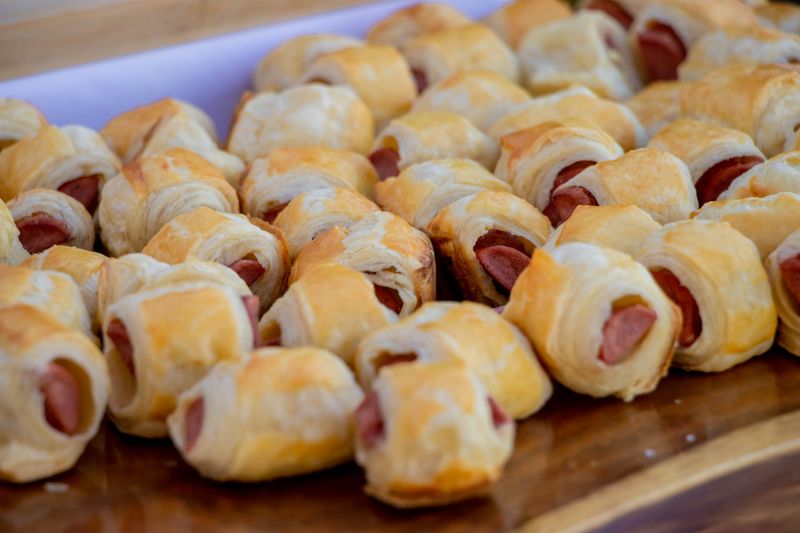
Pigs in a Blanket
Small sausages wrapped in golden pastry are familiar appetizers at American parties and gatherings. Across the Atlantic, British versions typically feature sausages wrapped in bacon instead.
Main ingredients: Cocktail sausages and pastry dough, or sausages and bacon in British versions.
Why the funny name? The sausages resemble little pigs tucked inside edible blankets.
The name “pigs in a blanket” comes from sausages (“pigs”) wrapped in dough or bacon (“blankets”). (Image by Pexels)
Ants on a Log
Crunchy celery, creamy peanut butter, and sweet raisins create this playful American snack. Its simple preparation and amusing appearance make it especially popular with children.
Main ingredients: Celery sticks, peanut butter, and raisins.
Why the funny name? Raisins resemble tiny ants marching along a celery log.
Devils on Horseback
Sweet dried fruit wrapped in smoky bacon creates a surprisingly elegant British appetizer.
The contrast between salty, crispy bacon and soft prunes or dates makes these bite-sized treats popular at parties.
Main ingredients: Prunes or dates, bacon, and optional fillings such as almonds.
Why the funny name? The exact origin is uncertain, but the dramatic name is commonly associated with its darker, richer ingredients.
Angels on Horseback
Tender oysters wrapped in bacon create a savory appetizer with a delicate seafood flavor.
Traditionally grilled or baked, this British dish offers an interesting contrast to its sweeter relative, Devils on Horseback.
Main ingredients: Oysters, bacon, and optional bread or seasonings.
Why the funny name? The whimsical name contrasts with Devils on Horseback, although its precise historical origin is unclear.
Welsh Rarebit
Golden toast covered in a rich, bubbling cheese sauce makes this Welsh-inspired British classic a comforting savory meal. Mustard, Worcestershire sauce, or ale often adds extra depth.
Main ingredients: Bread, cheddar cheese, mustard, and optional ale or Worcestershire sauce.
Why the funny name? Originally known as Welsh rabbit, the dish contains no rabbit. The historical name’s exact origin remains uncertain.
Hush Puppies
Golden cornmeal fritters with crisp exteriors and soft centers are staples of Southern American cooking. Their mildly sweet, savory flavor pairs particularly well with fried fish and barbecue.
Hush puppies also stand out among funny food names thanks to their unusual name.
Main ingredients: Cornmeal, flour, eggs, milk or buttermilk, and seasonings.
Why the funny name? Folklore links the name to tossing fried scraps to quiet barking dogs, although the story is unverified.
Sloppy Joe
Seasoned ground beef simmered in a tangy tomato-based sauce spills generously from a soft hamburger bun. Its messy texture makes this American sandwich a casual dining favorite.
Main ingredients: Ground beef, tomato sauce, onions, seasonings, and hamburger buns.
Why the funny name? “Sloppy” describes the sandwich’s messy filling, while the origin of “Joe” is disputed.
Rocky Mountain Oysters
Seafood lovers might be surprised to discover that these regional American delicacies contain no oysters.
Traditionally breaded and fried, they are associated with ranching communities in the American West.
Main ingredients: Bull testicles, flour or breadcrumbs, and seasonings.
Why the funny name? “Oysters” is a humorous euphemism for the dish’s actual main ingredient.
Garbage Plate
Hearty portions of meat, potatoes, macaroni salad, and sauce come together in this famous Rochester, New York specialty.
Everything is piled onto one plate, creating an intentionally messy but satisfying meal.
Main ingredients: Hamburgers or hot dogs, home fries, macaroni salad, mustard, onions, and meat sauce.
Why the funny name? The name reflects the seemingly chaotic combination of different foods served together.
Funeral Potatoes
Creamy, cheesy potatoes topped with a crunchy layer make this casserole a familiar comfort food in parts of the American West. It is especially associated with family gatherings and community meals in Utah.
Main ingredients: Potatoes, cheese, sour cream, condensed soup, and a crunchy topping.
Why the funny name? The dish became associated with meals served after funerals, particularly in Latter-day Saint communities.
Chicken Bog
Tender chicken, rice, and sausage simmer together in this hearty South Carolina specialty. Unlike drier rice dishes, Chicken Bog has a moist, soft consistency that makes it particularly comforting.
Main ingredients: Chicken, rice, smoked sausage, broth, and seasonings.
Why the funny name? The name is often linked to its moist, boggy texture, although explanations vary.
Frogmore Stew
Large pots of shrimp, corn, sausage, and potatoes create this flavorful Lowcountry seafood boil. Despite the name, the dish contains neither frogs nor a conventional thick stew.
Main ingredients: Shrimp, corn, smoked sausage, potatoes, and seafood seasoning.
Why the funny name? Frogmore refers to a community on St. Helena Island, South Carolina, associated with the dish.
Goetta
Crispy on the outside and tender inside, this Cincinnati-area breakfast specialty combines seasoned meat with steel-cut oats.
Known as goetta, it has one of the more distinctive funny food names, while German immigrant traditions helped shape its recipe.
Main ingredients: Ground pork or beef, steel-cut oats, onions, and spices.
Why the funny name? The name comes from German regional dialect traditions associated with grain-based sausage mixtures.
Scrapple
Pork trimmings and cornmeal are cooked into a firm loaf, then sliced and fried until golden.
This Pennsylvania Dutch specialty turns inexpensive ingredients into a hearty breakfast food.
Main ingredients: Pork trimmings, cornmeal, broth, and seasonings.
Why the funny name? The name reflects its traditional use of pork scraps and leftover meat.
Stargazy Pie
Fish heads peeking through a golden pastry crust give this Cornish specialty one of the most memorable appearances in British cuisine. The pie is traditionally associated with the fishing village of Mousehole.
Main ingredients: Pilchards or sardines, pastry, eggs, potatoes, and seasonings.
Why the funny name? The fish heads appear to gaze upward toward the stars.
Rumbledethumps
Potatoes and cabbage baked beneath melted cheese create this rustic Scottish comfort dish. Its hearty combination resembles other traditional British potato-and-vegetable recipes.
Main ingredients: Potatoes, cabbage, onions, butter, and cheese.
Why the funny name? The exact origin is uncertain, but the playful Scottish name is often associated with the sounds of preparing or mixing the ingredients.
Cullen Skink
Smoky haddock and tender potatoes simmer in a creamy broth to create this beloved Scottish soup. Its rich flavor and warming texture make it particularly appealing during colder weather.
Main ingredients: Smoked haddock, potatoes, onions, milk, and butter.
Why the funny name? Cullen is a Scottish town, while “skink” historically referred to certain soups or broths.
Singin’ Hinnies
These traditional griddle cakes from northeastern England combine buttery dough with sweet dried fruit.
Known as singing hinnies, they have one of the more unusual funny food names and offer a comforting treat with a texture somewhere between a scone and a flat cake.
Main ingredients: Flour, butter or lard, currants, milk, and baking powder.
Why the funny name? “Singin'” describes the sizzling sound during cooking, while “hinny” is a regional term of affection.
Nun’s Farts
Light, airy fried pastries dusted with sugar make this French treat far more appetizing than its translated name suggests.
Known as pets de nonne, these delicate fritters are traditionally associated with French pastry-making.
Main ingredients: Flour, eggs, butter, water, and sugar.
Why the funny name? The French name translates literally to “nun’s farts,” a humorous reference commonly linked to the pastries’ airy nature.
Head Cheese
Despite its dairy-inspired name, this traditional cold-cut specialty contains no cheese.
Cooked meat from a pig’s head is set in gelatin, producing a sliceable terrine enjoyed in several European cuisines.
Main ingredients: Pork head meat, broth, natural gelatin, and seasonings.
Why the funny name? “Head” refers to the meat used, while “cheese” describes its molded, sliceable preparation rather than dairy content.
Drunken Noodles
Wide rice noodles tossed with chilies and savory sauce create this popular Thai stir-fry. Known as pad kee mao, the dish delivers bold flavors without requiring alcohol.
Main ingredients: Wide rice noodles, basil, chilies, garlic, vegetables, and meat or tofu.
Why the funny name? Several explanations exist, including its association with drinking occasions, but the precise origin remains uncertain.
Century Egg
Dark, translucent egg whites and creamy, strongly flavored yolks make this Chinese preserved egg a distinctive delicacy.
Also known as a century egg, it stands out among funny food names while offering a unique appearance and flavor shaped by the preservation process.
Main ingredients: Duck or chicken eggs preserved using an alkaline curing mixture.
Why the funny name? Despite the dramatic name, the eggs are typically preserved for weeks or months rather than 100 years.
Beggar’s Chicken
Whole chicken wrapped in lotus leaves and traditionally encased in clay is baked until tender and aromatic.
This Chinese specialty is celebrated for its fragrant meat and unusual preparation.
Main ingredients: Whole chicken, lotus leaves, aromatic seasonings, and optional stuffing.
Why the funny name? Traditional legends describe a beggar cooking a chicken in clay, although historical versions of the story vary.
Buddha Jumps Over the Wall
Premium seafood, mushrooms, meat, and other ingredients simmer together in this elaborate Chinese soup.
Its complex flavors and luxurious reputation make it a famous specialty of Fujian cuisine.
Main ingredients: Seafood, mushrooms, meat, broth, and other ingredients depending on the recipe.
Why the funny name? Legend suggests the aroma is so irresistible that even Buddha would jump over a wall to taste it.
Husband and Wife Lung Slices
Thinly sliced beef and offal coated in chili oil and aromatic Sichuan seasonings create this bold Chinese cold dish.
Despite its unusual English translation, beef lung is not necessarily included.
Main ingredients: Beef, beef offal, chili oil, Sichuan peppercorns, and spices.
Why the funny name? The dish’s Chinese name is associated with a married couple who popularized it in Chengdu.
Flying Jacob
Chicken, bananas, and cream come together in this unexpected Swedish casserole. Its unusual flavor combination makes it one of the most distinctive funny names to say when ordering food.
Main ingredients: Chicken, bananas, bacon, cream, chili sauce, and peanuts.
Why the funny name? The Swedish name Flygande Jacob refers to its creator, Ove Jacobsson, who worked in air freight.
Poffertjes
Tiny, fluffy Dutch pancakes served with melted butter and powdered sugar create a charming bite-sized treat.
Their soft centers and lightly golden surfaces make them popular at markets and festivals.
Main ingredients: Flour, milk, eggs, yeast, butter, and powdered sugar.
Why the funny name? The playful-sounding Dutch name refers to these small pancakes rather than a particular joke or unusual ingredient.
Many funny food names when ordering food become less mysterious once you understand the ingredients and cultural background.
Even the strangest-sounding dishes often represent beloved regional traditions rather than culinary jokes.
Discover 30 real funny food names, unusual origins, and surprising culinary traditions. (Image by Unsplash)
2. Why Do Restaurants Use Creative and Funny Food Naming Tricks?
Restaurant menus do more than describe ingredients; they shape first impressions and influence what customers remember.
Creative dish names can turn ordinary meals into conversation starters, helping restaurants build distinctive identities and encourage customers to explore unfamiliar flavors.
Capture Customer Attention: Unexpected names stand out on crowded menus, encouraging diners to pause and discover what makes a dish special.
Create Memorable Dining Experiences: Playful expressions make meals easier to remember, especially when customers share amusing ordering experiences with friends.
Encourage Social Media Sharing: Unusual dish names can inspire photos, reviews, and online conversations, giving restaurants additional organic exposure.
Build a Distinctive Brand Personality: Humorous naming helps communicate a restaurant’s character, from casual and quirky to adventurous and unconventional.
Spark Curiosity About Ingredients: Mysterious names encourage customers to read descriptions and discover unfamiliar combinations they might otherwise overlook.
Reflect Local Culture and Traditions: Regional expressions, historical references, and culinary folklore give dishes cultural significance beyond their ingredients.
Make Ordering More Entertaining: Customers searching for funny names to use when ordering food may enjoy playful menu items that turn a simple order into a memorable interaction.
Behind many unusual menu names are clever combinations of humor, storytelling, and familiar language patterns.
Restaurants use these techniques to make dishes more recognizable, spark curiosity, and create memorable connections between customers and their food.
Use Unexpected Animal References
Animal-inspired names create amusing mental images that immediately attract attention.
Dishes like Toad in the Hole and Pigs in a Blanket sound unusual but describe familiar comfort foods, making them easier to remember and discuss.
Turn Everyday Expressions Into Dish Names
Common sayings and playful phrases can give ordinary ingredients a distinctive identity.
Names like Sloppy Joe and Bubble and Squeak transform simple meals into memorable menu items while reflecting their appearance, texture, or cooking characteristics.
Create Funny Contrasts Between Names and Ingredients
Some dishes become memorable because their names suggest something completely different from their actual ingredients.
Rocky Mountain Oysters and Welsh Rarebit demonstrate how unexpected wording can surprise diners and encourage questions about traditional recipes.
Add Dramatic or Exaggerated Descriptions
Over-the-top descriptions make dishes sound adventurous, luxurious, or unusually powerful.
Buddha Jumps Over the Wall demonstrates how dramatic storytelling can emphasize a dish’s reputation and create curiosity about its ingredients and preparation.
Use Rhymes and Playful Word Combinations
Rhyming words, alliteration, and unusual sound patterns can make menu names catchy and enjoyable to pronounce.
Restaurants may use these techniques to develop distinctive identities, particularly for desserts, snacks, and children’s meals.
Reference Local Legends and Historical Stories
Traditional dishes often inherit names from folklore, historical events, or regional customs.
Stargazy Pie and Beggar’s Chicken demonstrate how storytelling can preserve cultural connections while making unfamiliar foods more intriguing to international diners.
Introduce Unexpected Humor or Mild Shock Value
Slightly outrageous expressions can generate curiosity and laughter without changing the food itself.
Names like Nun’s Farts and Garbage Plate show how funny food names can challenge expectations, although restaurants must consider cultural sensitivity and customer preferences.
4. FAQs about Funny Food Names
Some menu names raise more questions than the dishes themselves, especially when unfamiliar expressions or cultural traditions are involved.
These answers uncover amusing dessert names and explain British food terminology.
Which desserts have the funniest names?
Spotted Dick, Nun’s Farts, and Eton Mess are among the most amusing dessert names. These traditional treats range from steamed fruit pudding to delicate fried pastries.
Why do some British foods have strange names?
Many unusual British food names originated from regional dialects, historical expressions, or descriptions of cooking sounds and appearances. For example, Bubble and Squeak references frying noises, while Toad in the Hole describes sausages in batter.
Can you use a fake name when ordering takeout?
Many restaurants allow customers to provide nicknames or playful names for takeout orders, provided they are appropriate and easy to understand.
However, delivery services and prepaid orders may require accurate contact or payment information, so avoid names that could cause confusion during pickup.
Some dishes are just as memorable for their unusual names as they are for their flavors. From amusing wordplay to cultural references, funny food names reveal the humor and history behind culinary traditions.
These quirky specialties offer plenty of conversation starters and surprising stories worth sharing. For more food facts and culinary discoveries, as well as guides on technology and daily support, explore other articles from TAG Mobile.
Share
TAG Blog
Stories, guides, and helpful updates for staying connected.