

How to Pack a Suitcase Efficiently in 6 Simple Steps
Smart packing can save space, protect your clothes, and make everything easier to find once your trip begins.
If you want to know how to pack a suitcase efficiently, focus on bringing only what you need and giving each item a practical place. A few simple techniques can keep your luggage neat, compact, and ready for travel.
1. How to Pack a Suitcase Efficiently Step by Step
Packing in the right sequence helps you use suitcase space more effectively while keeping clothes and travel essentials easy to manage. These six steps show a practical way to organize, protect, and check your luggage before departure.
Step 1: Lay Everything Out and Cut the Extras
Spread every item you plan to bring on a bed or clean surface, then compare it with your itinerary. Remove duplicate outfits, unnecessary backups, and anything unlikely to be used. This simple edit prevents overpacking before items even enter the suitcase.
Step 2: Group Items by How They Should Be Packed
Sort belongings by packing method rather than only by category. Keep items that should be rolled, folded, protected, or stored in pouches together. This approach makes how to efficiently pack a suitcase easier because each item already has a clear place and purpose.
Step 3: Build the Suitcase From Heavy to Light
Place shoes, jeans, toiletry bags, and other heavier items near the wheel end or bottom of the suitcase. Add lighter clothing above them. Proper weight distribution improves balance, protects softer items, and keeps the suitcase easier to handle while traveling.
It is usually recommended to put the heaviest articles in the first luggage layer and organizing garments in layers.
Step 4: Turn Empty Spaces Into Packing Space
Use small gaps around shoes, suitcase corners, and sidewalls for socks, underwear, belts, or charging cables. Filling these unused areas can free up valuable central space without compressing larger garments or making the suitcase harder to close.
Step 5: Protect the Things That Can Leak, Break, or Wrinkle
Store liquids in sealed bags, wrap fragile belongings with soft clothing, and place wrinkle-prone garments near the top. Keeping vulnerable items away from heavy objects reduces the risk of spills, cracks, crushed accessories, and deeply creased clothes during transit.
Step 6: Do the Zip, Lift, and Weight Test
Zip the suitcase without forcing it, lift it from the handle, and check whether the weight feels balanced. Weigh the bag if your airline has luggage limits. If it feels too heavy or strained, remove nonessential items or redistribute the contents before leaving.
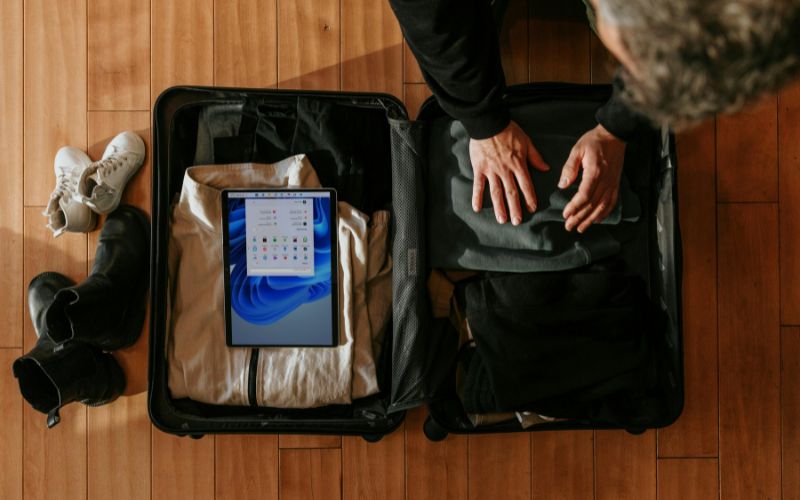
2. Roll, Fold, or Use Packing Cubes?
Choosing between rolling, folding, and packing cubes depends on the type of clothing, available space, and how organized you want your luggage to stay.
When learning how to most efficiently pack a suitcase, the best results often come from combining all three methods instead of relying on only one.
| Packing Method | Best For | Main Advantages | Possible Drawbacks |
| Rolling | T-shirts Casual tops Leggings Underwear Lightweight clothing | Saves space, fills narrow gaps, and makes individual items easier to see | Can create wrinkles in structured or delicate garments |
| Folding | Shirts Trousers Dresses Jackets Wrinkle-prone clothing | Helps garments keep their shape and reduces creasing when stacked carefully | Takes up more flat surface area and may leave unused gaps |
| Packing Cubes | Outfits Underwear Accessories Grouped clothing | Keeps categories separated, simplifies unpacking, and prevents items from shifting | Cubes add slight bulk and work best when not overfilled |
| Combined Method | Mixed wardrobes and compact luggage | Balances space efficiency, wrinkle control, and organization | Requires a little more planning before packing |
For travelers figuring out how to efficiently pack a carry on suitcase, rolling soft clothing, folding structured pieces, and using small packing cubes for grouped essentials can create a compact layout without sacrificing accessibility.
3. What Not to Do When Trying to Save Suitcase Space?
Saving suitcase space works best when you remove unnecessary bulk instead of simply squeezing more items inside.
Avoiding a few common packing mistakes can make luggage lighter, easier to organize, and less likely to become overstuffed.
- Overpacking “just in case” items: Extra outfits, backup shoes, and rarely used accessories quickly take up valuable room. When learning how to pack a suitcase efficiently, prioritize pieces that match your itinerary and can be worn more than once.
- Packing bulky clothing without a plan: Thick sweaters, jackets, and jeans can consume large sections of the suitcase. Wear the heaviest pieces during travel when practical, or place them strategically at the bottom.
- Filling every packing cube too tightly: Overstuffed cubes may become rigid and harder to fit around other items. Leave enough flexibility so they can sit neatly beside shoes, toiletries, and smaller accessories.
- Bringing full-size toiletries unnecessarily: Large bottles add both weight and volume. Transfer essential products into travel-size containers and bring only the amount you are likely to use during the trip.
- Ignoring airline luggage limits: Saving space does not always mean reducing weight. A compact suitcase can still exceed baggage restrictions, so check size and weight limits before departure and weigh your luggage at home.
>>> Read More: How to Wash Silk: 3 Things To Check To Not Lose Its Softness or Shine
4. FAQs about Packing a Suitcase Efficiently
Questions about how to pack a suitcase efficiently often come down to balancing space, organization, and clothing protection. The answers below clarify a few common packing decisions that can make luggage easier to manage.
Is it better to roll clothes or fold them in a suitcase?
Rolling works well for soft, casual pieces such as T-shirts, leggings, and underwear, while folding is better for structured or wrinkle-prone clothing. Using both methods usually gives the best balance between space savings and garment care.
Does rolling clothes actually save more space?
Rolling can reduce wasted gaps and make it easier to fit clothing into narrow spaces, especially with lightweight fabrics. However, it does not always save more room than careful folding, so for how to most efficiently pack a suitcase, it depends on the type and thickness of each garment.
How many pairs of shoes should I pack for a week?
For most one-week trips, two to three pairs are usually enough. Choose versatile options that cover everyday walking, dressier plans, and any activity-specific needs rather than packing a separate pair for every outfit.
Should I leave empty space in my suitcase?
Leaving a small amount of free space is useful for souvenirs, purchases, or items you may need to repack differently on the return trip. It also reduces pressure on zippers and makes the suitcase easier to close without forcing it.
What should I pack at the bottom of my suitcase?
Place heavier items such as shoes, jeans, toiletry bags, and other dense belongings near the bottom or wheel end. This improves weight distribution, helps the suitcase stay balanced, and prevents heavier objects from crushing lighter clothing.
5. Final Thoughts
Packing smarter can make every stage of a trip feel more organized and manageable. With how to pack a suitcase efficiently, the focus should be on choosing versatile essentials, using suitable folding or rolling methods, filling unused gaps, and keeping luggage weight under control. Even small adjustments can create valuable extra space and simplify unpacking later.
For more practical travel and lifestyle tips, as well as instructions towards government support and technology updates, explore the TAG Mobile blog!
- Share This:
-

-

-

-

-



About the author
