

What Is the Average Monthly Cost for Memory Care? A Realistic Budget Guide
Memory care expenses can place a significant burden on long-term family budgets, especially as care needs become more complex. Knowing what is the average monthly cost for memory care gives families a clearer starting point for planning housing and necessary supervision.
Actual rates vary depending on where a facility is located and the specific level of daily assistance a resident requires.
1. What Is the Average Monthly Cost for Memory Care?
Memory care pricing varies considerably across the U.S., with monthly costs often ranging from about $5,000 to more than $13,000. Rates depend on geographic location and property amenities alongside the overall level of dementia support needed.
For families asking what is the average monthly cost for memory care, U.S. News estimates a national average of about $7,645 per month.
This is higher than the median assisted living cost of more than $6,200 because memory care incorporates continuous supervision alongside specialized staff training.
2. Memory Care at Home vs. Residential Memory Care Cost
The financial difference between these two options depends largely on how many hours of support a person needs each day.
Residential memory care typically uses a monthly rate, while home care is commonly priced by the hour.
When families compare both options and ask what is the average monthly cost for memory care, total expenses depend heavily on the required hours of daily assistance.
- Residential Memory Care: Industry estimates put the national median cost at approximately $7,600 to $8,200 per month.
- Home Care: The national median rate was approximately $35 per hour in 2025.

3. What Other Resources Can Help Pay for Memory Care?
Memory care can become a major long-term expense, so families often combine several funding sources rather than depend on a single benefit.
Knowing how various public benefits and personal assets work can make monthly budgeting more realistic and reveal where financial assistance may be available.
Medicare
Medicare generally does not pay for long-term custodial memory care, including ongoing room, board, and help with activities of daily living when those are the only services needed.
It still pays for essential clinical healthcare when a resident needs treatment.
For families calculating what is the average monthly cost for memory care, Medicare should therefore be viewed primarily as health coverage rather than a way to fund the residential portion of memory care.
Any non-covered long-term care expenses generally remain the resident’s responsibility unless another funding source applies.
Medicaid
Medicaid can be more helpful with long-term services for people who meet their state’s financial and functional eligibility requirements.
Depending on the state, Home and Community-Based Services programs or waivers may cover certain supportive services provided in community-based settings rather than requiring someone to receive all care in an institution.
Coverage varies considerably by state, and not every residential memory care community participates in Medicaid programs.
Families should verify which services are covered, whether the chosen community accepts Medicaid, and which housing or personal expenses must still be paid separately before relying on this benefit.
Long-Term Care Insurance
Long-term care insurance may help pay for services associated with dementia, depending on the specific policy. Some policies cover only nursing home care, while others can include assisted living, home care, adult day services, or other forms of long-term support.
Coverage limits, waiting periods, daily or monthly benefit amounts, and eligibility triggers vary by contract.
Families should review the policy carefully to confirm whether memory care qualifies, how benefits are activated, and whether cognitive impairment itself meets the insurer’s requirements for beginning payments.
VA Benefits for Eligible Veterans or Survivors
Qualified veterans and survivors may be able to receive additional monthly support through VA pension programs. Aid and Attendance can increase a qualifying VA pension when a veteran or survivor needs assistance with daily activities, while Housebound benefits may apply in other qualifying circumstances.
These payments can potentially be applied toward long-term care expenses, including some costs associated with residential care.
Eligibility hinges on service history, financial standing, and clinical need, so families should review current VA requirements before including the benefit in their budget.
Social Security and Retirement Income
Social Security retirement benefits provide monthly income based largely on a worker’s earnings history and can become one component of a memory care payment plan. Eligible workers can generally begin retirement benefits from age 62, although claiming before full retirement age can reduce the monthly payment.
Pensions, 401(k) withdrawals, and annuities also provide stable funding. Families often compare dependable monthly income against the community’s rate first, then determine how much additional funding must come from insurance, benefits, or personal assets.
Personal Savings and Assets
Many families rely on private wealth when public programs fall short. They often draw from accumulated investment accounts or use the equity gained from selling a primary home to fund long-term care needs.
These resources can provide flexibility when a resident needs immediate placement or chooses a community that does not participate in Medicaid.
Because dementia care may continue for years, families should avoid considering only the first few months of expenses.
Building a long-term budgets should account for annual rate increases alongside higher care levels to avoid depleting available assets too quickly.
>>> Read More: How to Pay for Assisted Living When Costs Feel Out of Reach
4. Families Managing Memory Care Can Get Free Support From the Lifeline Program
Monthly care expenses can stretch a household budget, making savings on essential services especially valuable. Understanding what is the average monthly cost for memory care highlights how quickly long-term care expenses can stretch a household budget.
Families who meet federal eligibility requirements may be able to reduce their phone or internet costs through Lifeline while managing other long-term care expenses.
The Lifeline Program is a federal assistance program that helps eligible low-income consumers reduce the monthly cost of qualifying phone or internet service. Consumers may qualify based on household income or participation in programs such as Medicaid, SNAP, SSI, Federal Public Housing Assistance, or the Veterans Pension and Survivors Benefit.
TAG Mobile is a Houston-based U.S. wireless provider participating in Lifeline and offering both prepaid and Lifeline-supported wireless services.
Customers may find its online enrollment, nationwide coverage options, multilingual support, no-contract approach, and selection of new or reconditioned devices useful when looking for an affordable way to stay connected.
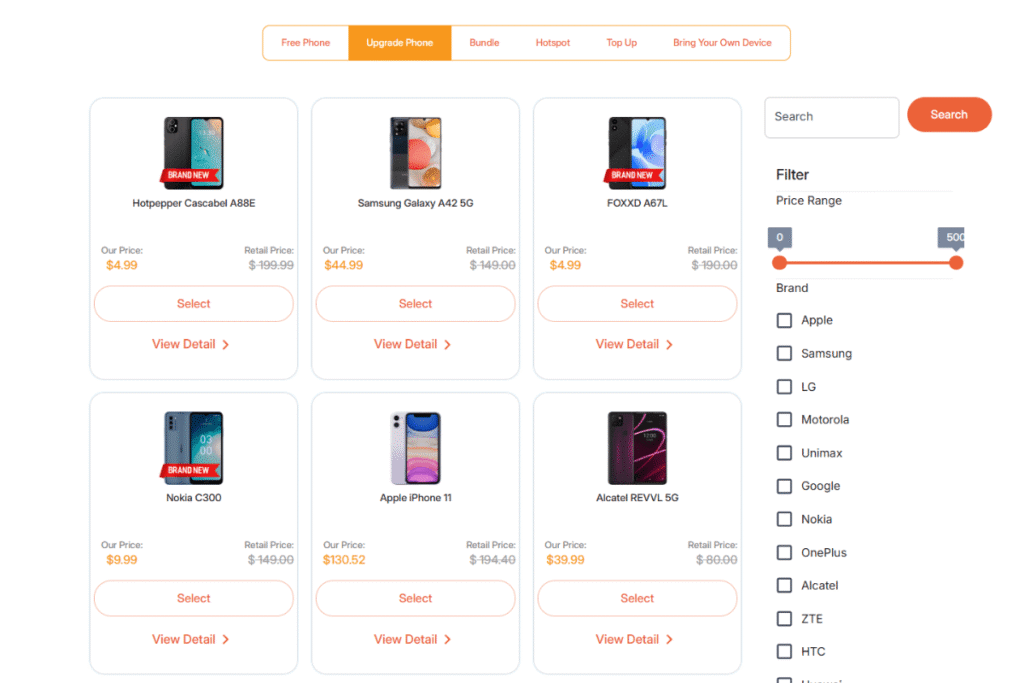
There are various device choices on TAG Mobile that eligible customers can review, alongside available service offers; prices, discounts, and availability may vary by location and eligibility.
- Clovertek G17: A practical tablet option paired with an available monthly service offer, suitable for customers looking for straightforward everyday connectivity.
- Samsung Galaxy A71 5G: Features a large display, 5G connectivity, 6GB of memory, and a 64 MP camera, making it appealing for streaming, photography, and multitasking.
- iPhone 13: Combines the familiar iOS experience with 5G connectivity, strong performance, and capable cameras, making it a well-rounded choice for Apple users.
- Samsung Galaxy S21 5G: Offers 5G connectivity and 8GB of memory, providing stronger performance for multitasking, apps, streaming, and other demanding mobile activities.
- FOXXD C67: A newer smartphone option in TAG Mobile’s catalog, offering an alternative for customers who want a straightforward Android device for everyday use.
Device availability and promotional pricing can change, and Lifeline itself subsidizes qualifying service rather than guaranteeing a free device; free or discounted devices are provider offers subject to eligibility, location, and availability.
Note: Eligibility varies by state and program. Offers depend on availability and qualifications. TAG Mobile operates under the federal Lifeline Program as an Eligible Telecommunications Carrier (ETC). Service is non-transferable and limited to one service per household.
5. FAQs about Memory Care Costs
Memory care pricing depends on far more than the room itself, so families should look closely at staffing, supervision, services, and the resident’s level of need.
Is home dementia care cheaper than memory care?
When evaluating what is the average monthly cost for memory care against home care, in-home support costs less if a senior needs only a few hours of daily help.
However, expenses rise rapidly when 24-hour care is required, making residential facilities more cost-effective over time.
Is memory care more expensive than assisted living?
Yes, memory care generally costs more than standard assisted living because it provides additional supervision, dementia-specific staff training, enhanced security, and specialized programming.
The higher rate reflects the increased level of support required for residents with Alzheimer’s disease or other forms of dementia.
What is included in the monthly cost of memory care?
The standard rate covers basic living arrangements while taking care of everyday chores and dining. The standard rate covers basic living arrangements while taking care of everyday chores and dining.
It also funds 24/7 safety monitoring alongside personalized assistance with routine personal hygiene.
6. Final Thoughts
Long-term dementia care requires careful financial preparation because monthly expenses can differ greatly by location, services, and level of supervision.
When estimating what is the average monthly cost for memory care, families should account for both standard fees and possible added care charges. Available benefits, insurance, retirement income, and personal assets can help shape a more sustainable budget.
- Share This:
-

-

-

-

-



About the author
