

How to Jumpstart a Car Safely With Cables or a Jump Starter
Battery trouble can leave a car stranded without warning, so knowing the correct starting procedure is a useful roadside skill. Whether you use jumper cables or a portable jump starter, following the right sequence helps reduce sparks, electrical damage, and unnecessary risk.
Let’s check how to jumpstart a car quickly in our guide.
1. What You Need to Jumpstart a Car by Yourself
Getting a dead battery running again requires the right equipment and a careful connection sequence.
Before starting, inspect the battery for severe damage, leaking, or swelling; if any of these are present, do not attempt a jump-start and seek professional help instead.
How to Jumpstart a Car With Jumper Cables
Jumper cables let a working vehicle temporarily supply power to a car with a discharged battery.
When learning how to jumpstart a car with cables, the safest approach is to connect the clamps in the correct order and use a solid metal ground away from the dead battery.
- Park the working vehicle close enough for the cables to reach, but do not let the vehicles touch.
- Turn both vehicles off and set the parking brakes.
- Connect the red clamp to the positive terminal of the dead battery.
- Connect the other red clamp to the positive terminal of the good battery.
- Attach one black clamp to the negative terminal of the good battery.
- Connect the remaining black clamp to an unpainted metal ground on the disabled vehicle, away from the battery.
- Start the working vehicle and let it run briefly.
- Try starting the vehicle with the dead battery.
- Once it starts, remove the cables in reverse order while keeping the clamps from touching.
How to Jumpstart a Dead Battery Without Another Car
A portable jump starter is useful when another vehicle is unavailable because it supplies starting power directly from its internal battery.
Exact controls vary by model, so always follow the jump pack manufacturer’s instructions and make sure the unit is sufficiently charged before connecting it.
- Turn off the vehicle and all electrical accessories.
- Place the jump starter on a stable surface away from belts, fans, and other moving engine parts.
- Connect the red clamp to the battery’s positive terminal.
- Connect the black clamp as directed by the jump starter manufacturer, typically to the negative terminal or approved grounding point.
- Turn on or activate the jump starter if required.
- Wait for the device to indicate that the connection is correct.
- Start the vehicle according to the jump starter’s instructions.
- Once the engine is running, switch off the jump starter and disconnect it carefully.
- If the engine does not start, stop and follow the device’s retry or recharge instructions rather than repeatedly cranking the starter.
2. How Long Should You Wait Before Trying to Start the Dead Car?
After connecting the jumper cables correctly and starting the working vehicle, wait about 3 to 5 minutes before trying the dead car, according to AAA. This short pause gives the discharged battery time to build enough surface charge to improve the chances of cranking the engine successfully.
If the engine still does not start, avoid repeated long attempts that may strain the starter or battery. Wait briefly, check the cable connections, and follow the vehicle manufacturer’s guidance before trying again.
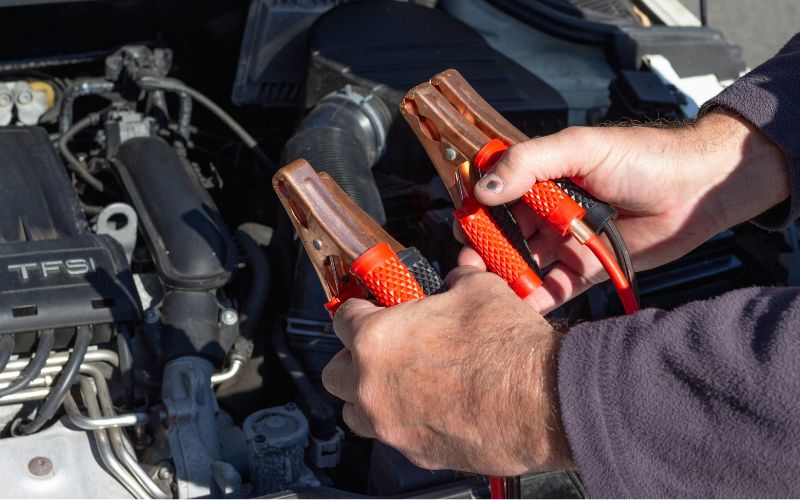
3. What if the Car Still Won’t Start After a Jump?
If the engine does not start after the first attempt, the problem may be more than a simple discharged battery.
When checking how to jumpstart a car, it helps to rule out weak connections, insufficient charging time, and other electrical or starting-system faults before trying again.
- Let the battery charge longer: Keep the vehicles connected with the working engine running for about 5 to 10 minutes, then try starting the disabled car again.
- Check the cable connections: Make sure each clamp is firmly attached to the correct terminal or grounding point and is making clean metal-to-metal contact.
- Inspect the battery condition: A severely discharged, internally damaged, swollen, leaking, or shorted battery may not accept enough charge to start the engine.
- Listen for the starter: Rapid clicking, a single click, or no cranking at all can point to a weak battery, poor connection, or starter-related problem.
- Consider the alternator: If the car starts briefly but dies soon afterward, the charging system may not be keeping the battery powered.
- Stop repeated attempts: If the engine still will not start after a few careful tries, seek professional roadside or mechanical assistance rather than continuing to crank the engine.
>>> Read More: How to Fix Squeaky Brakes: Find the Noise Before the Repair
4. Common Jumpstart Mistakes to Avoid
Jump-starting looks simple, but a few careless mistakes can damage electrical components or create unnecessary safety risks.
Knowing what to avoid is especially important when learning how to jumpstart a car by yourself, since you may not have another person checking the setup.
Connecting the Clamps in the Wrong Order
Attaching jumper cables incorrectly can create sparks, short circuits, or damage to vehicle electronics. Always connect the positive to positive first, then attach the negative cable to the good battery and a suitable metal ground on the disabled vehicle rather than improvising the sequence.
Letting the Vehicles Touch
The two vehicles should be parked close enough for the jumper cables to reach, but they should never physically touch. Contact between them can create an unwanted electrical path and increase the risk of short circuits during the jump-start process.
Clamping Directly to a Damaged Battery
Do not attempt to jump-start a battery that is swollen, cracked, leaking, or visibly corroded beyond normal surface buildup. Damaged batteries can be unsafe to charge and may require replacement or professional inspection instead of another starting attempt.
Allowing Cable Clamps to Touch
Once the jumper cables are connected to a power source, the metal clamps should never touch each other.
Accidental contact can create a direct short, producing sparks and potentially damaging the battery, cables, or nearby electrical components.
Repeatedly Cranking the Engine
Long or repeated starting attempts can overheat the starter and place additional strain on the battery.
If the engine does not start after a few short attempts, pause, recheck the connections, allow more charging time, and investigate whether another mechanical or electrical problem is involved.
5. Frequently Asked Questions about Jumpstarting a Car
Jump-starting is usually straightforward when the cables are connected correctly, and both vehicles are in suitable condition. These answers cover common concerns about electronics, what to do after the engine starts, and why a jump may sometimes fail.
Can jumping a car damage the electronics?
Yes, incorrect cable placement, reversed polarity, or voltage spikes can potentially damage sensitive electronic components. Following the correct connection order, using good-quality cables, and avoiding damaged batteries helps reduce that risk.
What should you do after the car starts?
Keep the engine running for a while so the charging system can begin replenishing the battery. Avoid shutting the car off immediately, and consider having the battery and alternator tested if the battery has gone flat without an obvious cause.
Why won’t my car start even with jumper cables?
The issue may be a severely discharged or damaged battery, poor cable contact, a faulty starter, or a charging-system problem. Recheck the clamps, allow more charging time, and seek professional help if the engine still does not crank or start.
6. Final Thoughts
Dead battery trouble becomes easier to manage when the right steps are followed calmly and safely. Learning how to jumpstart a car helps reduce cable mistakes, electrical risks, and unnecessary delays. If the vehicle still will not start, the battery or charging system may need professional attention.
Users can explore more useful tips and Lifeline-supported mobile service through TAG Mobile for dependable roadside communication.
- Share This:
-

-

-

-

-



About the author
