

How to Patch Jeans: Easy Ways to Repair Holes That Last
Small holes, thinning denim, and worn seams do not always mean your favorite jeans need replacing.
Knowing how to patch jeans can help reinforce damaged areas, restore structure, and extend the life of the fabric with simple sewing techniques. From adding a hidden patch to repairing the crotch or closing a hole without one, the right method can create a cleaner, stronger, and more comfortable result.
1. How to Patch Jeans Step by Step?
Strong jean repairs depend on securing the damaged fabric before the hole grows larger. Preparing the area carefully and reinforcing it with a suitable denim patch can create a repair that holds up better through regular wear and washing.
- Trim loose threads: Cut away frayed strands around the hole without removing healthy denim, leaving a cleaner edge for the repair.
- Choose the patch: Select denim or another durable fabric slightly larger than the damaged area so the patch extends beyond the weakened edges.
- Position the patch: Place it behind the hole for a discreet repair or over the outside when you want the patch to become part of the design.
- Secure it before sewing: Pin, baste, or use temporary fabric adhesive to prevent the patch from shifting while you work.
- Stitch around the damaged area: Sew through both the jeans and patch using short, closely spaced stitches. A sewing machine can provide faster reinforcement, while hand sewing works well for smaller repairs.
- Reinforce weak sections: Add extra rows of stitching across thin denim surrounding the hole rather than sewing only along the opening.
- Finish the repair: Trim excess patch fabric and loose threads, then gently stretch the repaired area to confirm that the stitching remains secure.
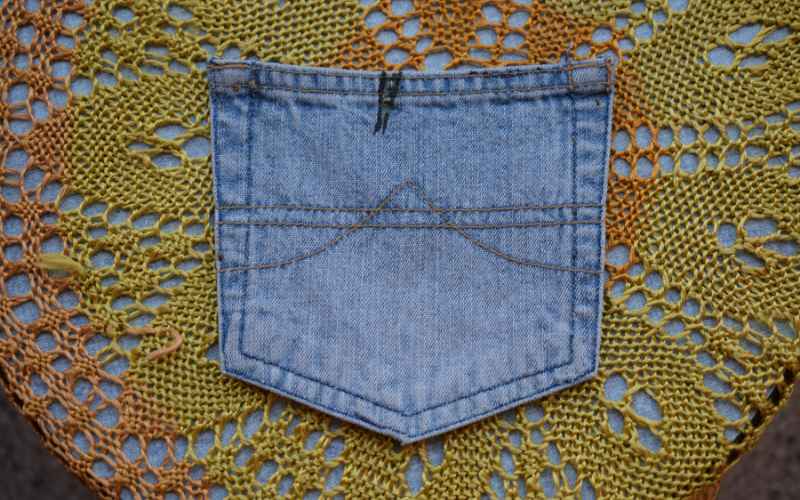
2. How to Sew a Hole in Jeans Without Patch?
Small tears can often be closed successfully without adding extra fabric when the surrounding denim is still strong, and the edges can meet naturally. Careful stitching keeps the repair flatter, prevents further fraying, and helps the damaged area blend more smoothly with the rest of the jeans.
- Inspect the tear: Check whether the surrounding denim is firm enough to hold stitches. Large holes or heavily worn areas are usually better candidates for how to sew a patch on jeans, since additional fabric provides stronger reinforcement.
- Trim loose threads: Snip away long frayed fibers around the opening without cutting into healthy denim.
- Turn the jeans inside out: Working from the reverse side helps keep knots and some stitches less visible on the exterior.
- Align the edges: Bring both sides of the tear together gently without stretching, overlapping, or puckering the fabric.
- Sew with small stitches: Use a backstitch, ladder stitch, or closely spaced machine stitches to close the tear securely. For anyone learning how to patch a hole in jeans without a patch, keeping stitches short and evenly spaced helps distribute tension across the repair.
- Reinforce the ends: Add several extra stitches just beyond both ends of the tear, where the fabric is most likely to reopen.
- Check the repair: Turn the jeans right side out and gently flex the area to confirm that the seam lies flat and holds during normal movement.
>>> Also read: How to Sew on a Button by Hand: A Beginner’s Guide
3. How to Patch Jeans Crotch?
Crotch damage needs stronger reinforcement because the area experiences constant movement, friction, and stretching during everyday wear. Repairing the weakened denim early helps prevent small holes from spreading into larger tears along the inner thighs or central seam.
- Turn the jeans inside out: This makes the damaged area easier to access and keeps most of the repair hidden from view.
- Trim loose fibers: Remove frayed threads around the hole while preserving any denim that is still structurally sound.
- Cut a flexible patch: Choose denim or sturdy cotton that is slightly larger than the worn area. Rounded corners can help the patch lie flatter and reduce bulky edges.
- Position the patch behind the damage: Center it so it covers both the visible hole and the surrounding thin fabric, where future tearing is more likely.
- Secure the patch: Use pins, basting stitches, or temporary fabric adhesive to hold it flat before sewing.
- Stitch across the weakened area: Sew short, closely spaced rows through both the jeans and patch, extending beyond the hole to reinforce the surrounding fabric.
- Strengthen nearby stress points: Add extra stitching around areas that look thin or stretched, especially along inner-thigh seams.
- Test the repair: Turn the jeans right side out and move the fabric gently to make sure the patched area feels secure without becoming too stiff or restrictive.
4. Keep DIY Repair Guides Close Wherever You Go
Repair tutorials are easier to follow when sewing instructions, fabric-care tips, and video guides are available whenever a project needs attention. Mobile access can also help you compare techniques or shop for supplies while working away from home.
TAG Mobile is a U.S. wireless provider headquartered in Houston, Texas, and a licensed Lifeline provider. Qualifying consumers may choose TAG Mobile because it combines Lifeline-supported monthly service with affordable wireless options, no contracts or credit checks, nationwide coverage where available, and access to free or discounted smartphones depending on eligibility, location, and inventory.
To apply, you must first qualify for the federal Lifeline Program.
Eligibility may come through household income at or below 135% of the Federal Poverty Guidelines or participation in qualifying programs such as Medicaid, SNAP, SSI, Federal Public Housing Assistance, Veterans Pension or Survivors Benefit, or WIC, with one Lifeline benefit allowed per household.

Getting started through TAG Mobile involves only a few core steps. Free smartphone availability depends on state, eligibility, program requirements, and current inventory.
- Verify your eligibility: Confirm that you qualify through household income or participation in an approved assistance program before continuing.
- Check availability: Enter your ZIP code on the TAG Mobile website to verify that Lifeline-supported service is offered in your area and to view any available device offers.
- Explore your options: Review the available Lifeline plan and compare any free or discounted phones currently offered for your ZIP code.
- Apply online: Complete the enrollment form by entering your personal information and selecting your qualifying method.
- Provide verification documents: Upload proof of identity, address, income, or program participation if requested during the application process.
- Submit your application: TAG Mobile will review your information and contact you if any additional verification is needed.
- Receive your service or device: After approval, eligible phones are typically shipped within 7-10 business days, subject to availability. Follow the included instructions to activate your Lifeline-supported wireless service.
Note: Eligibility varies by state and program. Offers depend on availability and qualifications. TAG Mobile operates under the federal Lifeline Program as an Eligible Telecommunications Carrier (ETC). Service is non-transferable and limited to one service per household.
5. Frequently Asked Questions About Jean Repairs
The best repair method depends on where the denim is damaged, how much fabric has worn away, and how much stress the area receives during wear. These common questions can help you choose between sewing, adhesive patches, and reinforcement techniques that keep jeans comfortable and wearable.
Can you patch jeans without sewing?
Yes. Iron-on patches, fabric glue, and adhesive repair patches can cover small holes without stitching. These methods are convenient for light damage, but high-friction areas such as the crotch, knees, or inner thighs usually hold up better when sewing is added.
Are iron-on patches permanent?
Iron-on patches can last through regular wear, but they are not always permanent. Repeated washing, heat, stretching, and friction can weaken the adhesive over time, so stitching around the edges can make the repair more durable.
How do you repair worn inner thighs?
Place a flexible denim patch behind the thinning area and stitch across both the weak fabric and the reinforcement. Extending the repair beyond the visible damage helps support nearby fibers before they develop into larger holes.
Should patches go inside or outside the jeans?
Both placements can work. An inside patch creates a subtler appearance and supports the denim from behind, while an outside patch can provide strong reinforcement and become part of the jeans’ visible style.
Final Words
Repairing worn denim can extend the life of a favorite pair while keeping small holes from becoming larger problems. Knowing how to patch jeans helps you choose the right method for tears, thinning fabric, crotch damage, or worn inner thighs.
Careful stitching and reinforcement can create stronger, cleaner results. For easy access to DIY tutorials wherever you are, eligible consumers can explore TAG Mobile.
- Share This:
-

-

-

-

-



About the author
