

How Many Yards in a Mile? Simple Conversion Guide
Converting miles into smaller units can make distances easier to picture and compare.
Knowing how many yards in a mile is especially useful for sports, running, road distances, land measurements, and everyday calculations. With a clear understanding of how miles, yards, and feet relate, you can handle common conversions quickly and interpret distance measurements with greater confidence.
1. How Many Yards in a Mile?
One mile equals exactly 1,760 yards.
To understand how many yards are in a mile, begin with the fact that one mile contains 5,280 feet and one yard contains 3 feet. Dividing 5,280 by 3 gives 1,760 yards.
This conversion remains constant, so the same formula can be used whenever you need to change miles into yards. For longer distances, simply multiply the number of miles by 1,760.
2. Build the Conversion From Units You Already Know
Breaking a full mile into familiar fractions makes the relationship easier to visualize. Instead of memorizing only the final total, you can compare quarter-mile, half-mile, and multi-mile distances to see how the yard values increase consistently.
Anyone wondering how many yards is in a mile can use the table below as a quick reference for several common distances.
| Distance | Yards |
| Quarter mile | 440 yards |
| Half mile | 880 yards |
| Three-quarter mile | 1,320 yards |
| One mile | 1,760 yards |
| Two miles | 3,520 yards |
>>> Read More: How Many Steps in a Mile? Fitness Tracking Guide for 2026
3. When Would You Convert Miles to Yards?
Miles are useful for longer distances, while yards provide more detail when the measurement becomes shorter or more specific. Knowing how many yards in a mile can therefore help in situations where a mile-based figure feels too broad for accurate planning or comparison.
Running and Track Workouts
Runners often use both miles and yards when planning workouts. Longer sessions may be described in miles, while intervals, recovery segments, and repeated sprints are often easier to understand in shorter units.
Converting a mile into 1,760 yards can help athletes divide a workout into manageable sections. Quarter-mile distances, for example, equal 440 yards. This makes it easier to compare training plans, estimate pacing, or understand how much distance remains during a structured exercise session.
Sports Field Comparisons
Yards are widely used in American sports, especially football, where field measurements are expressed in yards. Converting miles into yards can help people compare a long distance with the dimensions of a familiar playing area.
One mile equals 1,760 yards, so the conversion provides a clearer sense of scale when discussing running drills, field distances, or event layouts. It can also help students understand why a mile is much longer than a single football field, even though both measurements use related customary units.
Walking and Fitness Goals
Fitness apps often display distance in miles, but some users may prefer smaller units when tracking shorter walking segments. Converting miles into yards can make incremental progress easier to understand.
For example, half a mile equals 880 yards, while a quarter mile equals 440 yards. These smaller values can be useful when setting short walking goals, dividing a route into sections, or estimating the remaining distance before reaching a destination.
Land and Property Measurements
Property boundaries and larger outdoor spaces may involve feet, yards, or miles, depending on their size. Converting between these units helps when comparing long boundary distances with shorter measurements used in landscaping, fencing, or site planning.
Using 1,760 yards per mile provides a consistent conversion point. Once the distance is expressed in yards, it can be easier to compare with measurements used for driveways, fields, walking paths, or other property features.
Route and Event Planning
Outdoor events, school activities, races, and community routes often combine long- and short-distance measurements. A route may be described in miles overall but use yards for specific sections, starting areas, or finishing zones.
Converting between the two units helps organizers and participants understand the layout more precisely. It also reduces confusion when signs, maps, or instructions use different measurement units within the same event.
4. Use Digital Learning Tools to Check More Precisely
Online calculators, educational apps, and search tools can make unit conversions faster when you are working with unfamiliar measurements. Consistent phone or internet access can therefore support learning, homework, navigation, and everyday calculations.
Lifeline is a federal benefit that lowers the monthly cost of qualifying phone, internet, or bundled service for eligible consumers. The program currently offers a monthly discount of up to $9.25 for qualifying households, with a higher amount available on qualifying Tribal lands.
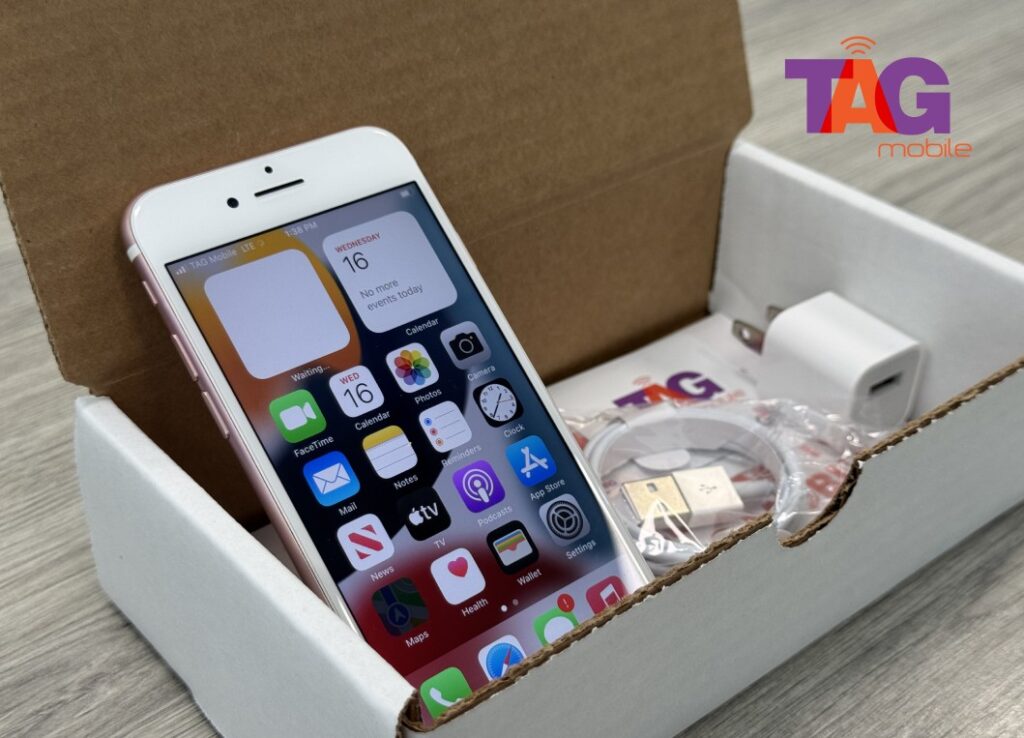
TAG Mobile participates in Lifeline and provides wireless service to eligible customers, along with device offers that may include a free smartphone depending on state, availability, and enrollment status. TAG Mobile also promotes unlimited talk and text and free smartphone offers for qualifying new Lifeline customers.
Applying for a free phone through TAG Mobile generally involves the following steps:
- Check your eligibility: Confirm that you qualify for Lifeline through household income at or below 135% of the Federal Poverty Guidelines or participation in an approved assistance program.
- Prepare eligibility documents: Gather acceptable proof of income, government-program participation, identity, and address when verification is required.
- Enter your ZIP code: Visit TAG Mobile and provide your ZIP code to view the Lifeline-supported plans and available device options offered in your area.
- Choose your plan and device: Review the available service plan and select an eligible free or discounted phone if an offer is available for your location.
- Complete your application: Provide your legal name, date of birth, residential address, contact details, and other information requested during enrollment.
- Complete eligibility verification: Your eligibility may be verified automatically. If additional verification is required, upload acceptable proof of program participation, household income, identity, or address.
- Review and submit: Check your personal information, eligibility details, and shipping address carefully before submitting your application.
- Wait for approval and delivery: Once approved, your available device or SIM option is typically delivered within 7-10 business days, depending on inventory and shipping conditions.
- Activate your service: Follow the provided activation instructions to set up your device, SIM card, or eSIM and begin using your TAG Mobile Lifeline-supported service.
SNAP is one of the government assistance programs that can establish Lifeline eligibility, along with options such as Medicaid.
Note: Eligibility varies by state and program. Offers depend on availability and qualifications. TAG Mobile operates under the federal Lifeline Program as an Eligible Telecommunications Carrier (ETC). Service is non-transferable and limited to one service per household.
5. Frequently Asked Questions About Miles and Yards
Miles, yards, tracks, football fields, and meters are often compared because they all describe distance. These answers clarify the differences and show how familiar references can make conversions easier to visualize.
Is a mile equal to four track laps?
On a standard 400-meter outdoor track, four laps equal 1,600 meters, which is slightly shorter than one mile. A full mile is approximately 1,609.34 meters, so runners need a little more than four standard laps to complete exactly one mile.
How many football fields equal one mile?
A regulation American football playing field between the goal lines is 100 yards long. Since how many yards in a mile equals 1,760, one mile corresponds to 17.6 football-field lengths when using the 100-yard playing field as the comparison.
Are yards and meters the same length?
No. One yard equals exactly 0.9144 meters, so a meter is slightly longer than a yard. This difference becomes more noticeable over long distances, which is why converting between U.S. customary and metric measurements requires a separate conversion factor.
6. Final Thoughts
One mile contains exactly 1,760 yards, making the conversion simple once the relationship between feet and yards is clear.
Understanding how many yards in a mile can help with sports, walking goals, land measurements, and route planning. Breaking the distance into quarters, halves, or full miles also makes calculations easier to visualize. Digital tools can simplify larger conversions, while TAG Mobile can support access to useful online resources and everyday learning.
- Share This:
-

-

-

-

-



About the author
